



Monstera plants, from the classic split-leaf Swiss cheese plant to trailing monkey mask and compact mini monsteras, for bright living rooms, shelves and offices. Free tracked delivery across Ireland and 24 more EU countries.



Which monstera should I buy?
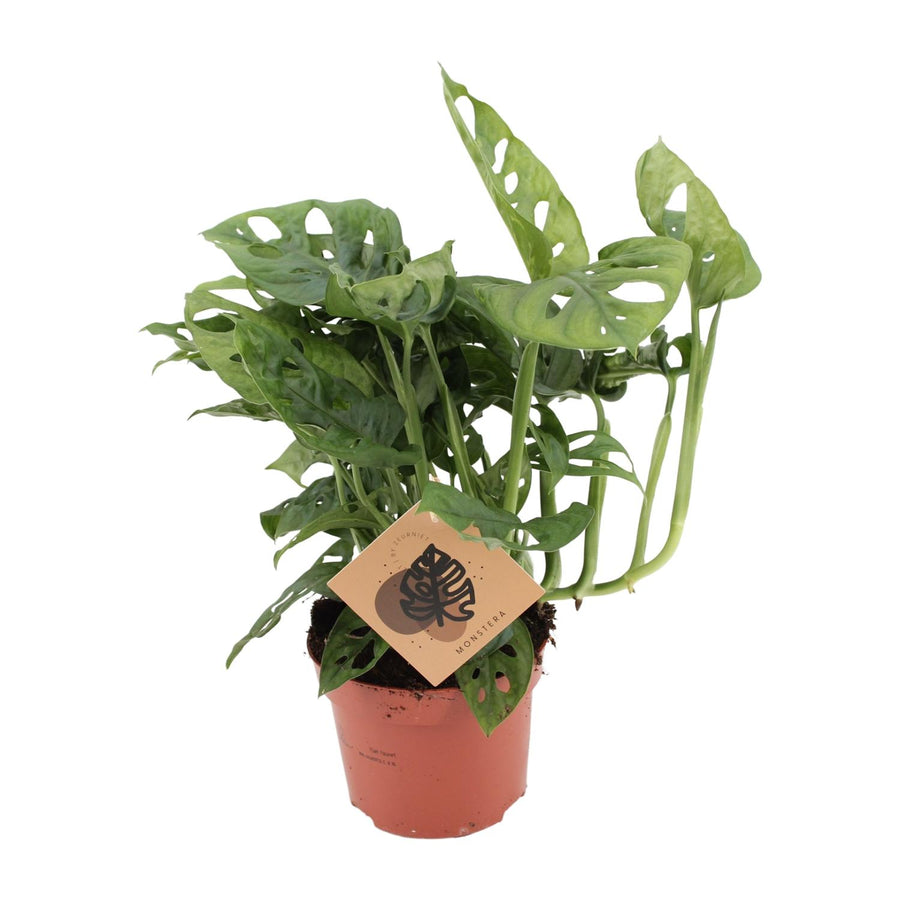
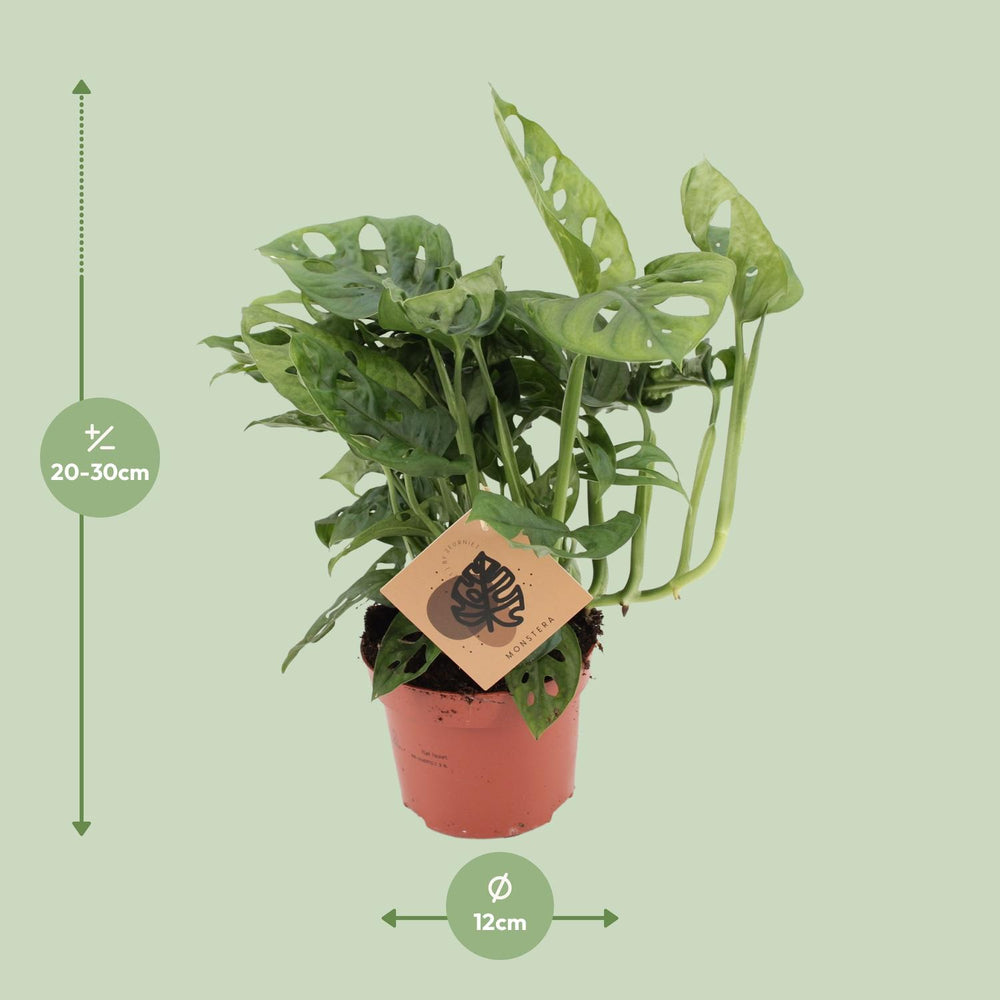
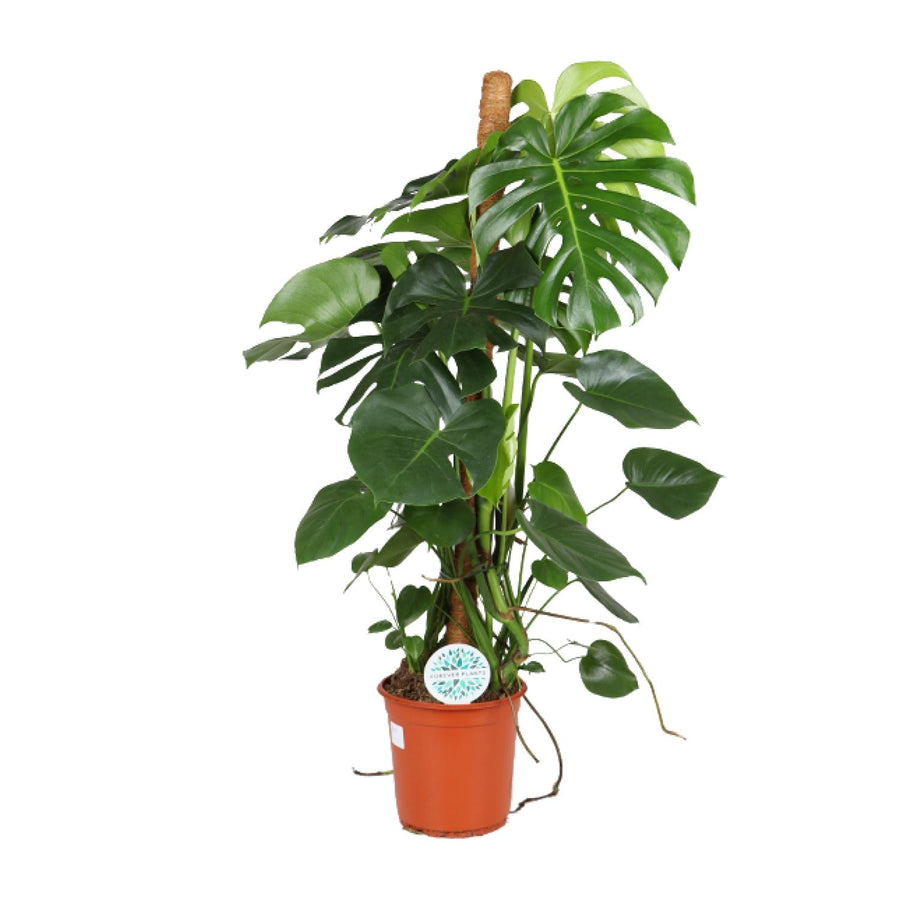
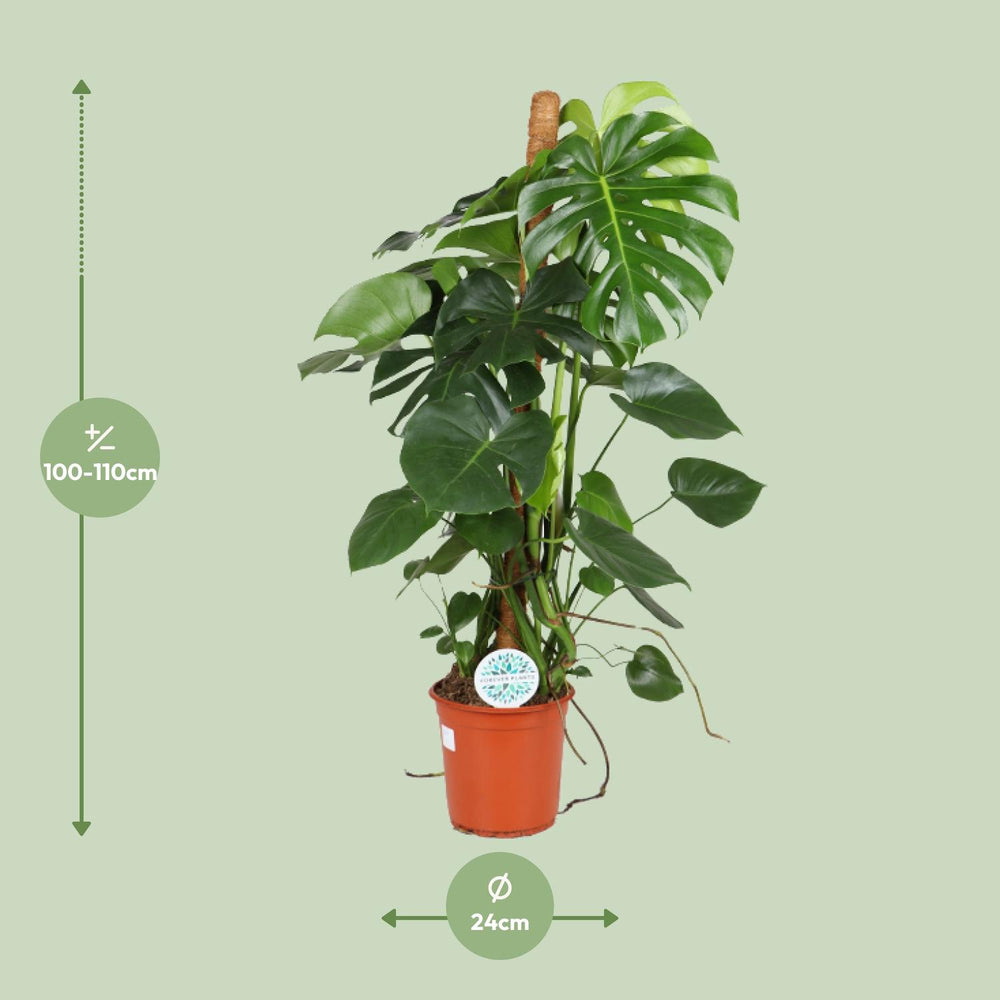
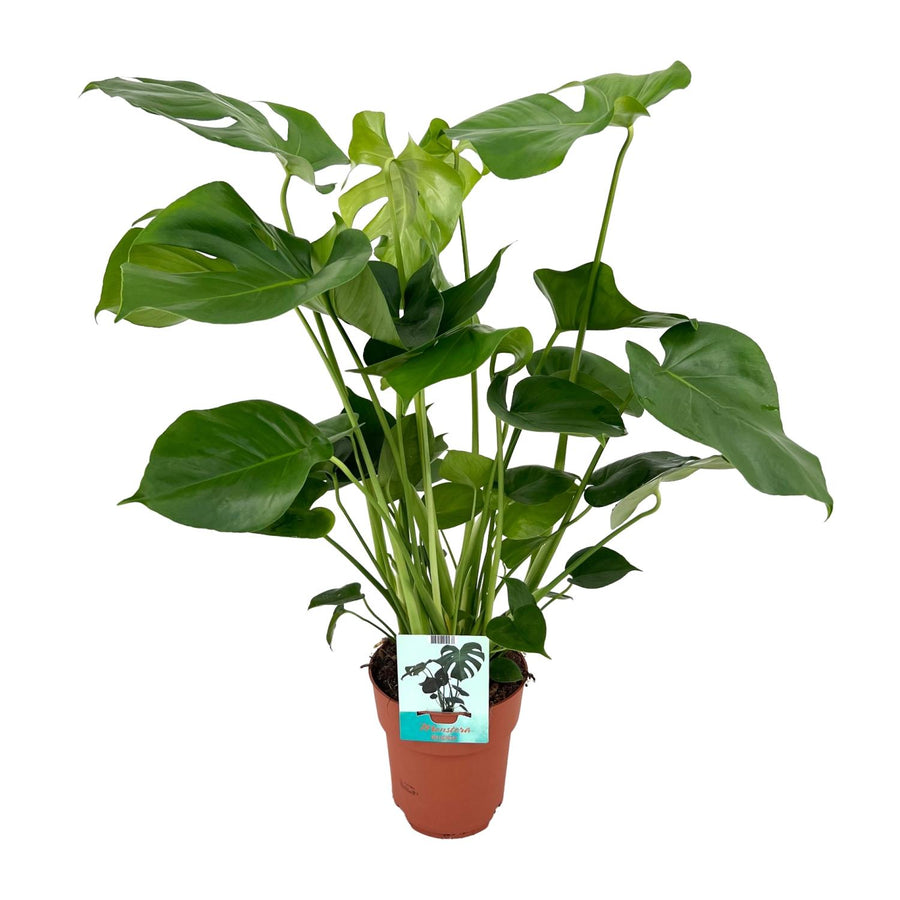
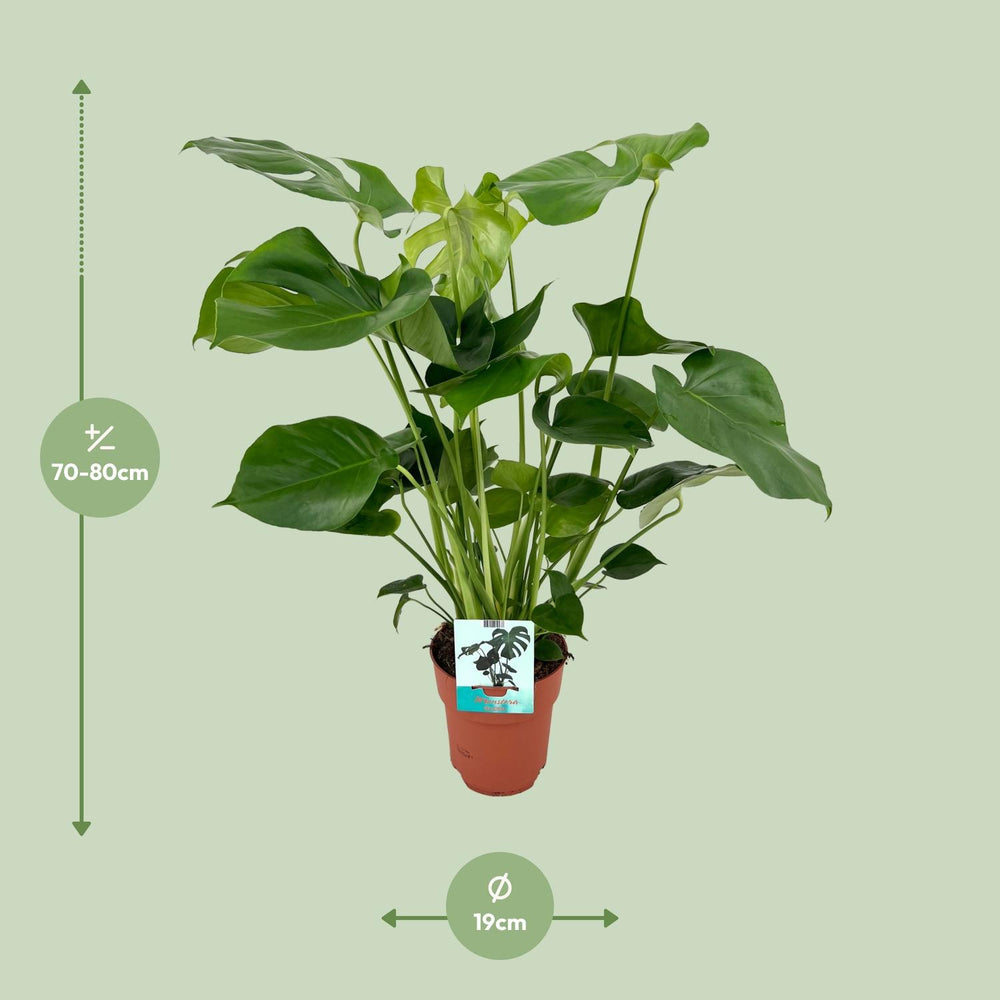
Buy Monstera deliciosa if you want the classic split-leaf Swiss cheese plant and have room for a plant that grows wide. Choose Monstera adansonii (monkey mask) for smaller, holed leaves that trail from a shelf or climb a small pole, and pick a mini monstera for the split-leaf look in a compact space. All prefer bright, indirect light, and none of them is pet-safe.
| Plant | Leaves | Habit | Best spot |
|---|---|---|---|
| Swiss cheese plant (Monstera deliciosa) | Large, deeply split | Upright, spreading; climbs a moss pole | Floor, bright living room |
| Compact Swiss cheese plant (Monstera deliciosa 'Tauerii') | Split, smaller | Bushy and compact | Sideboard, smaller rooms |
| Monkey mask (Monstera adansonii) | Oval with many holes | Trailing or climbing | Shelf, hanging planter |
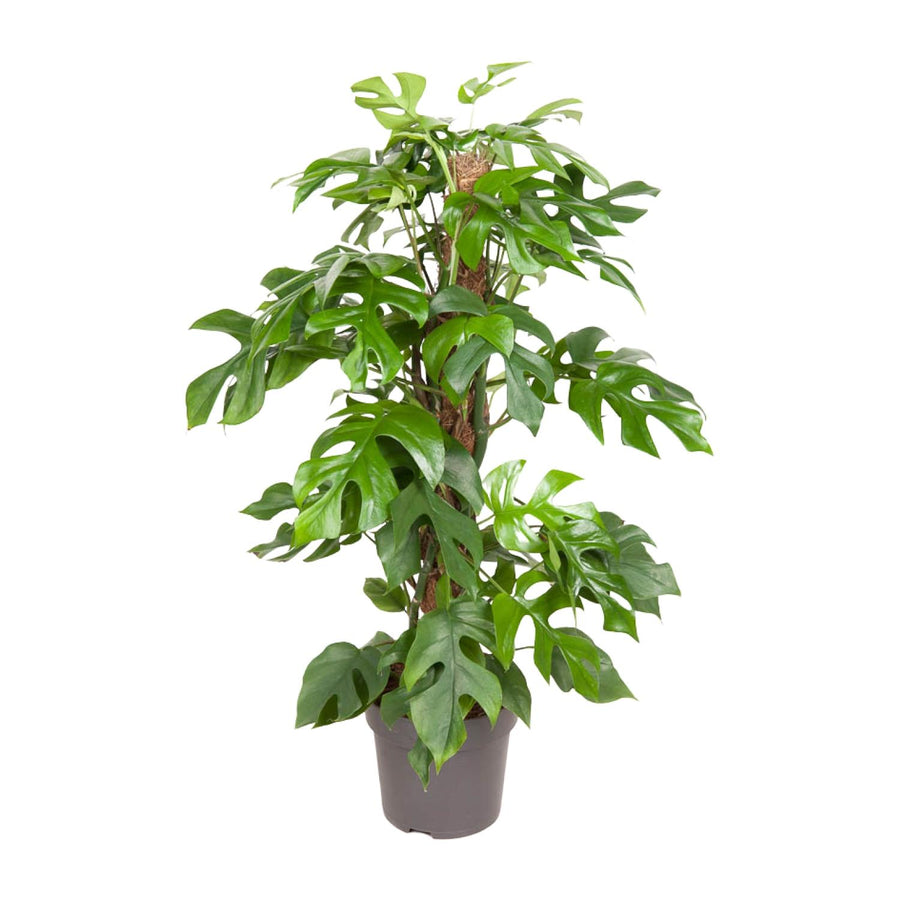
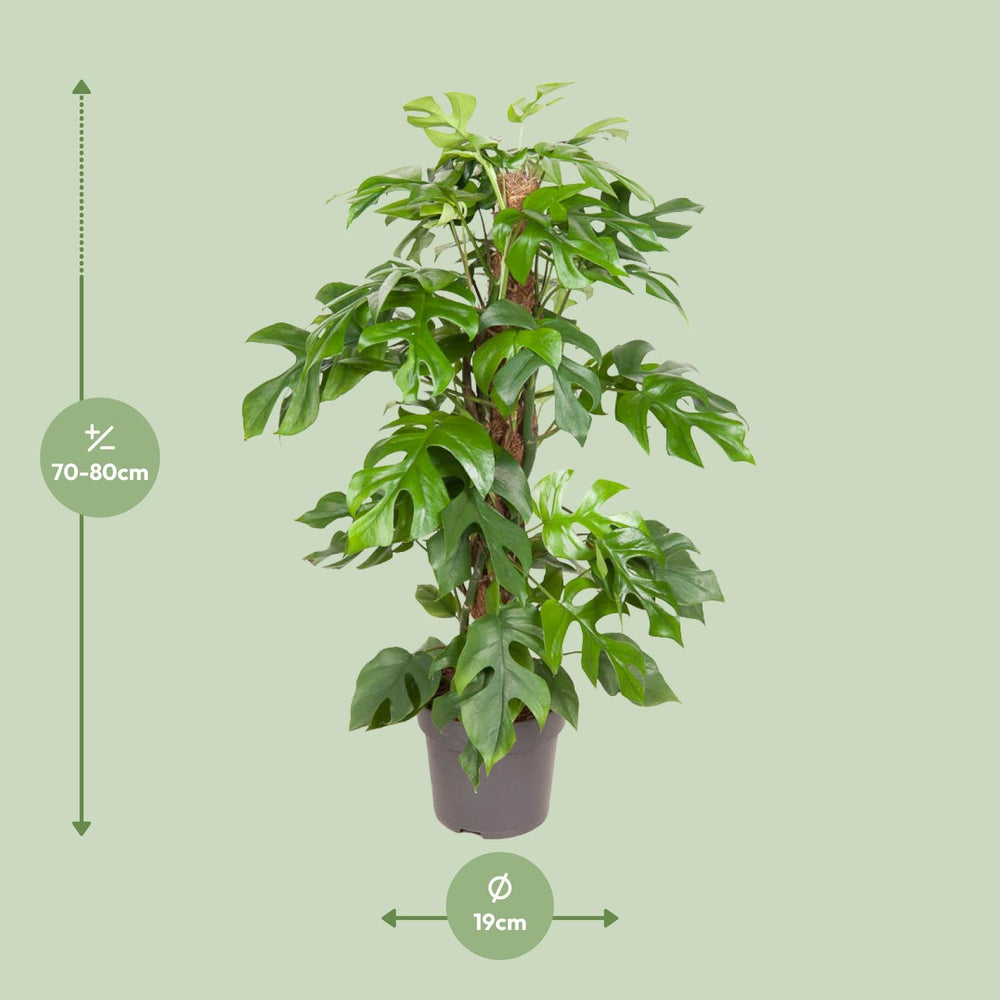
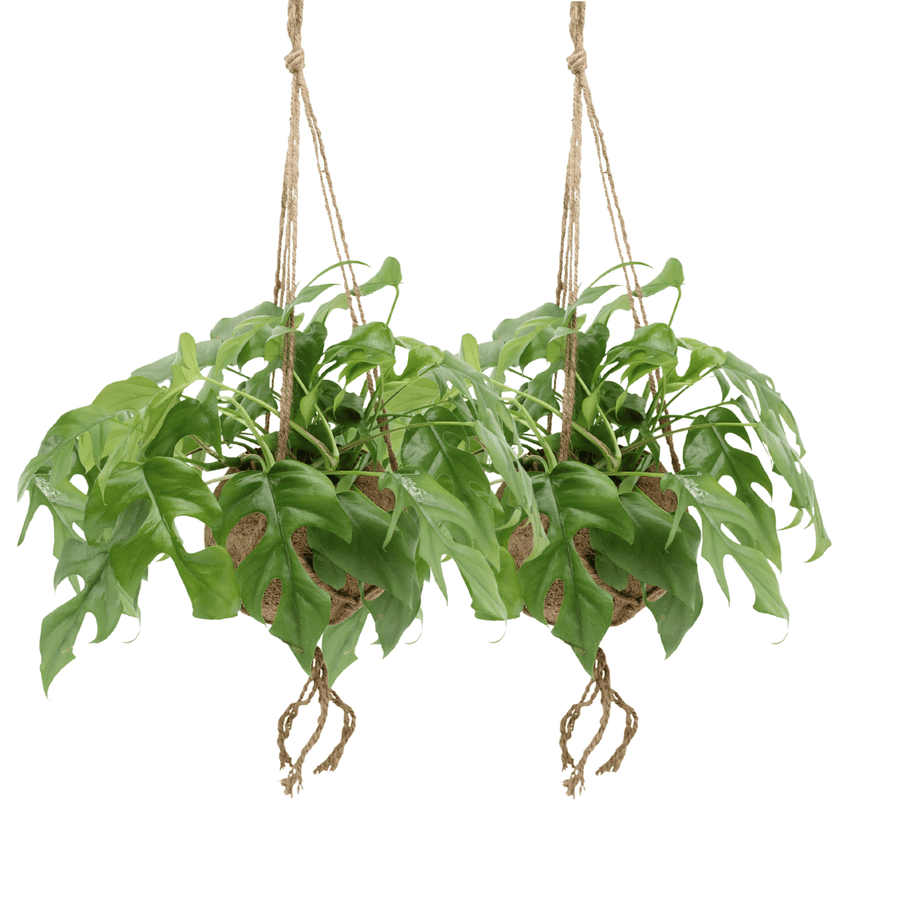
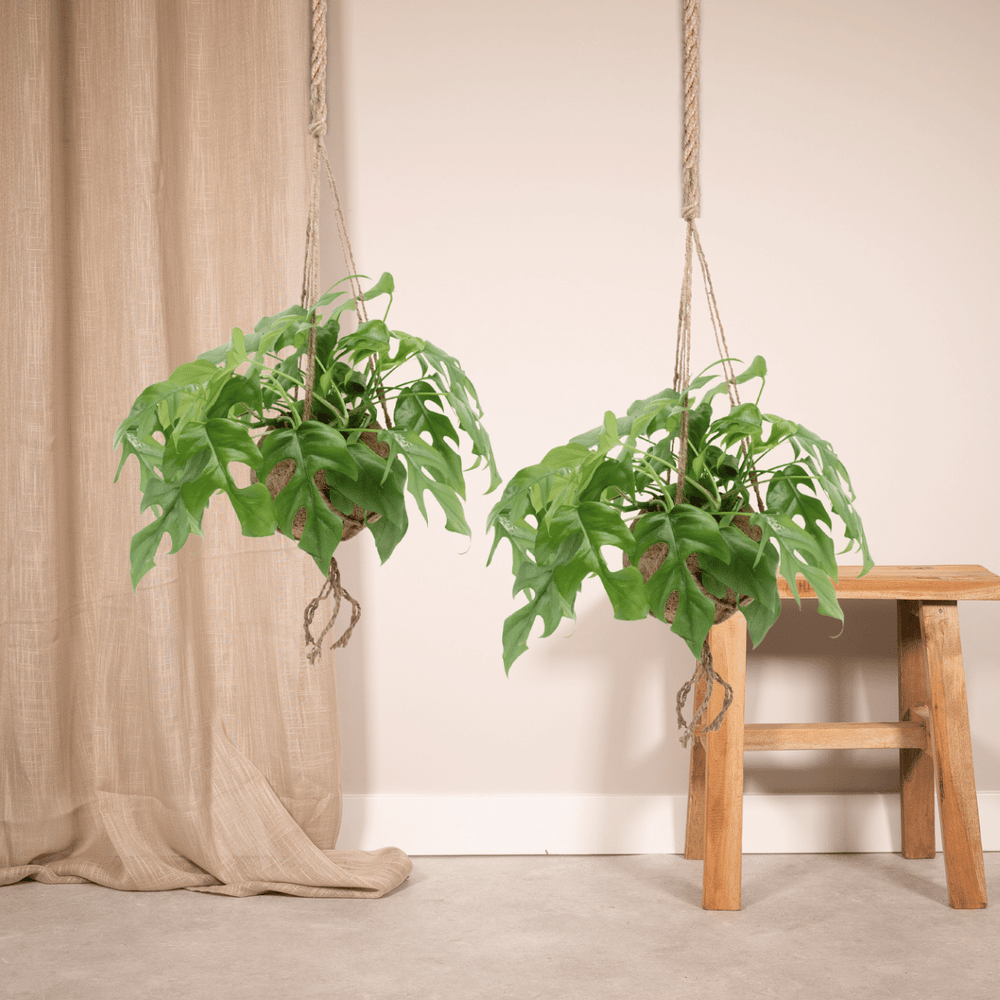
| Mini monstera (Rhaphidophora tetrasperma) | Small, split | Climbing | Pole or trellis, kokedama |
| Soil-free duo (Monstera adansonii with Clusia) | Holed and glossy mix | Compact, grown in water and clay pebbles | Desk, windowsill away from direct sun |
Why do monstera leaves have holes?
The holes and splits, called fenestrations, are thought to help the leaves shed wind and rain and let light reach lower leaves in the rainforests of southern Mexico and Central America, where monsteras climb tall trees. Young plants start with small, solid leaves; the splits appear as the plant matures and receives enough light, usually after a couple of years.
How to care for a monstera indoors
Give it bright, indirect light, a metre or two from a window but out of harsh midday sun. Water when the top 3–5 cm of compost is dry, roughly every one to two weeks in summer and less often in winter, and feed monthly from April to September with a balanced liquid feed. A moss or coir pole keeps a large Monstera deliciosa upright and encourages bigger leaves. For soil-free sets, top up water only when the level indicator reads low.
Frequently asked questions
Is monstera toxic to cats and dogs?
Yes. Monstera contains calcium oxalate crystals that irritate the mouth and stomach if chewed, so keep it out of reach of pets and small children, or choose from our pet-safe plants instead.
Why are my monstera leaves not splitting?
Usually because the plant is still young or is not getting enough light. Move it closer to a bright window, avoiding direct midday sun, and new leaves should gradually develop splits.
How big does a Monstera deliciosa get indoors?
With a support pole and good light it can reach 2–3 m over several years. Pruning long stems in spring keeps it to the size of your room.
Explore related: Indoor Plants · Office Plants · Pet-Safe Plants