

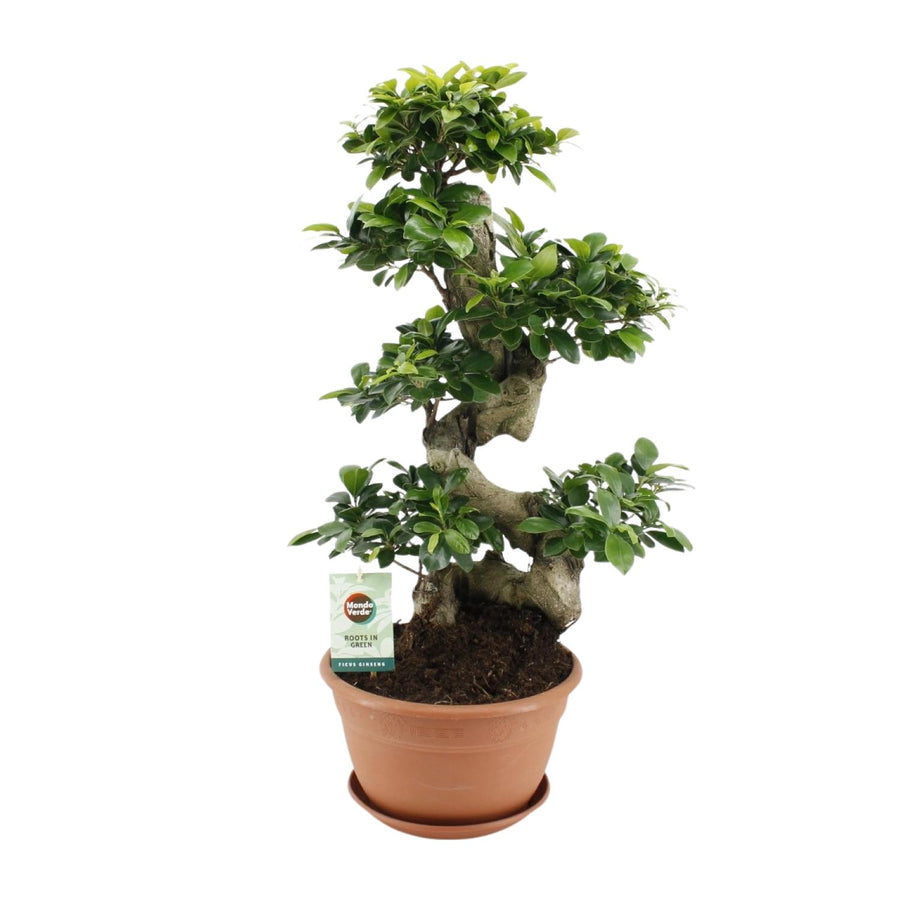
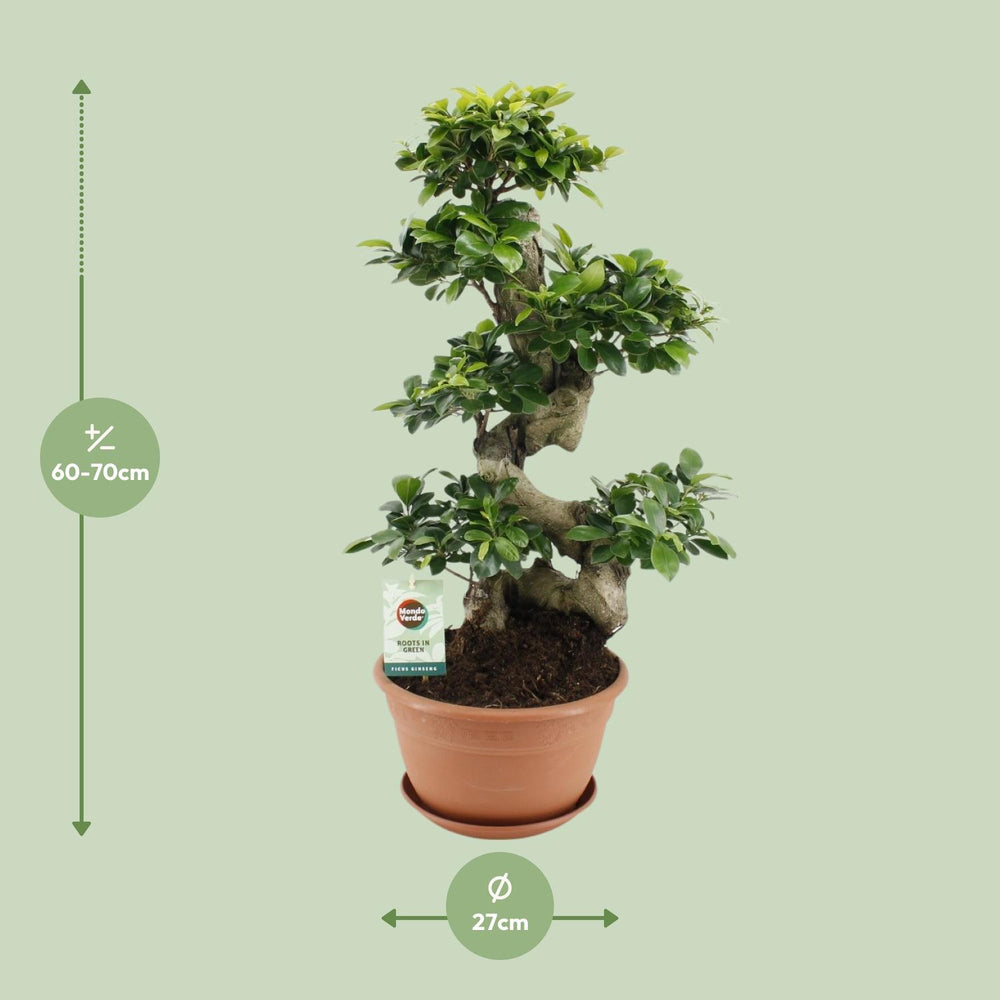


Tall, sculptural floor plants – dragon trees, spineless yucca, giant bird of paradise, ponytail palm, kentia and columnar succulents – that give a living room, hallway or office a single strong focal point. Free tracked delivery across Ireland and 24 more EU countries.




Which architectural plant should I choose?
Start with the light you have. For a bright spot near a window, choose spineless yucca, Strelitzia nicolai, ponytail palm, sago palm or an African milk tree. For medium or lower light, the kentia palm and Dracaena fragrans types such as 'Rikki', 'Lemon Lime' and 'White Stripe' cope best. Most of these plants arrive at 70–150cm tall in 17–27cm pots, and several come in a woven basket or a decorative grey or white pot, ready to stand on the floor.
| Plant | Shape | Light | Watering | Pets |
|---|---|---|---|---|
| Madagascar dragon tree (Dracaena marginata) | Slim stems, spiky rosettes in green, magenta or striped | Bright, indirect | Let the top few cm dry out | Toxic if eaten |
| Dragon tree (Dracaena fragrans Deremensis group) | Upright canes, broad striped leaves | Medium to bright | Let the top few cm dry out | Toxic if eaten |
| Spineless yucca (Yucca elephantipes) | Woody trunks topped with sword leaves | Bright, some direct sun | Sparingly; dry between waterings | Toxic if eaten |
| Ponytail palm (Beaucarnea recurvata) | Swollen base, fountain of thin leaves | Bright | Very sparingly; stores water in its base | Pet-safe |
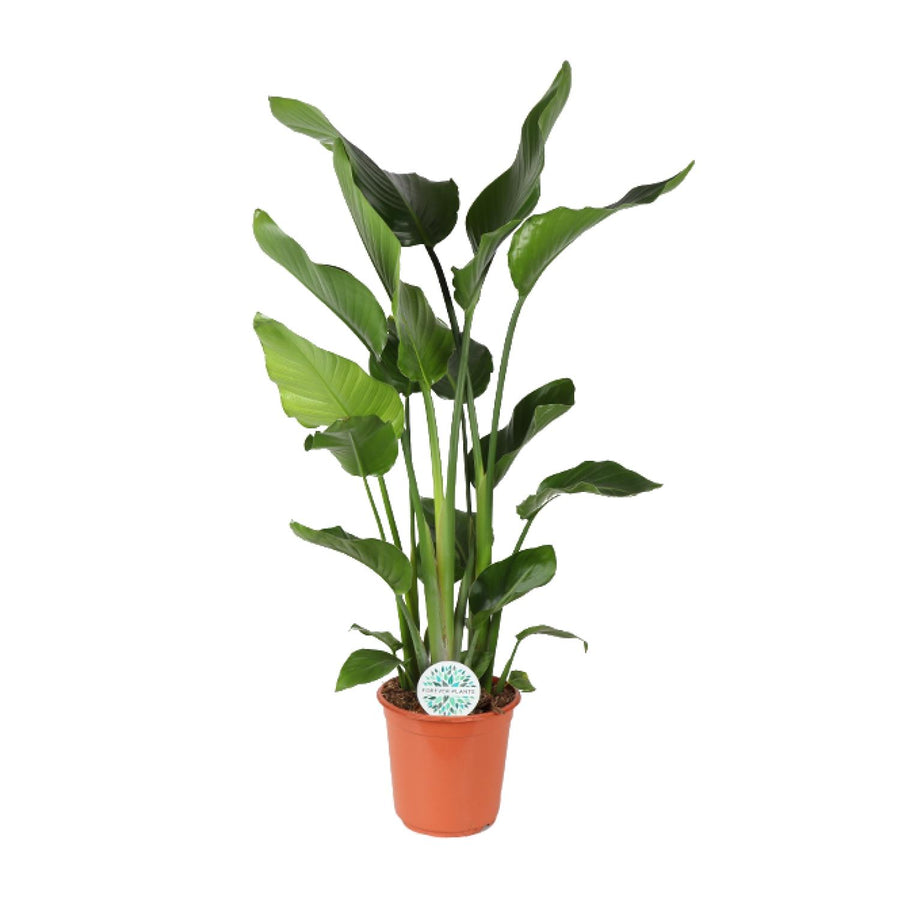
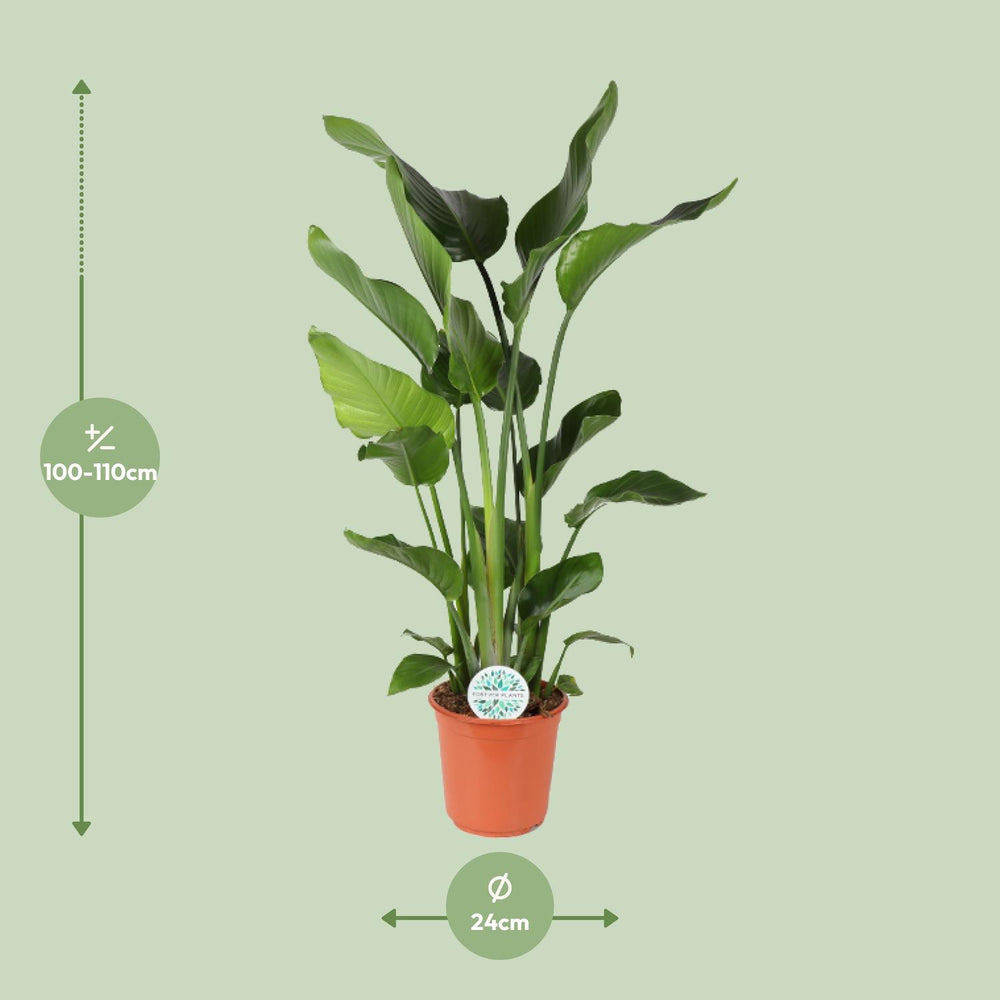
| Giant bird of paradise (Strelitzia nicolai) | Large paddle leaves on upright stems | Bright, some direct sun | When the top of the compost is dry | Toxic if eaten |
| Kentia palm (Howea forsteriana) | Arching, feathery fronds | Medium to lower light | Keep lightly moist, never soggy | Pet-safe |
| Sago palm (Cycas revoluta) | Stiff, glossy fronds from a stout trunk | Bright | Sparingly | Highly toxic |
How to look after a tall statement plant
Give it room to grow upwards and outwards, away from radiators and cold draughts. Turn the pot a quarter every few weeks so it grows evenly rather than leaning towards the window. Overwatering is the most common problem: nearly all of these plants dislike soggy compost, so water thoroughly, let the excess drain away, and wait until the compost has dried before watering again, less often in winter.
Succulents, cycads and palms
The African milk trees (Euphorbia trigona 'Rubra', Euphorbia acrurensis and Euphorbia eritrea) are columnar succulents that need the brightest spot you have and very little water. The sago palm is a slow-growing cycad, not a true palm, and the ponytail palm is not a palm either. For soft, tropical foliage, the variegated shell ginger (Alpinia zerumbet 'Variegata') brings cream-striped leaves to a bright room.
Frequently asked questions
What is the best tall indoor plant for low light?
The kentia palm is the most tolerant of lower light, followed by Dracaena fragrans varieties. Neither wants a dark corner, but both manage well a few metres back from a window.
Which large houseplants are safe for cats and dogs?
In this collection, the ponytail palm and the kentia palm are pet-safe. Dracaena, yucca, strelitzia and euphorbia are toxic if eaten, and the sago palm is highly toxic, so keep those out of reach.
How often should I water a dracaena or yucca?
Only when the top few centimetres of compost feel dry, which is often every one to two weeks in summer and less in winter. Never leave the pot standing in water.
Explore more: Indoor plants · Office plants · Palm plants · Strelitzia care guide · Large office plants guide