



Sympathy & Memorial Plants: Bereavement and Remembrance Plant Gifts Delivered Across Ireland & Europe
The best sympathy plant to send in Ireland is the white peace lily (Spathiphyllum), the traditional plant of condolence, whose white spathes return year after year. For a grieving household with cats or dogs, a pet-safe Kentia palm or Calathea is kinder; for someone with a garden, an olive tree, the ancient symbol of peace, can become a living memorial. This guide covers which plant to choose, what to write, when to send it, and how to send a plant to a family elsewhere in Europe. For gifts beyond bereavement, see our indoor plant gifts guide.
A funeral bouquet is gone within a week or so, often during the hardest days. A living plant stays: it is there in the kitchen the morning of the funeral, still there a month later, and a peace lily can be in flower again the following year. Many bereaved families value that quiet permanence, and a plant asks nothing of them except an occasional watering.
What is the best plant to send as a sympathy gift in Ireland?
The peace lily is the best-known sympathy plant in Ireland, followed by the olive tree for peace and long-lived foliage plants such as the Kentia palm and the cast iron plant for a gift that lasts. What matters most is that the plant is dignified, easy to keep alive when the recipient has little energy, and suited to their home: a pet-safe plant where there are cats or dogs, a shade-tolerant one for a dim house, and a tree only for someone with a garden or a bright room.
Below, each plant is profiled with its origin, light, watering and pet safety, so you can choose with confidence. There is a quick comparison table further down.
Peace lily (Spathiphyllum): the traditional sympathy plant
The peace lily comes from the rainforest floors of tropical Central and South America, which is why it copes with the low to medium indirect light of an Irish sitting room or hallway and still flowers well. Keep the compost lightly moist; the plant droops visibly when it is thirsty and recovers within hours of a drink, a forgiving signal for someone who is not thinking about plants right now. Its white spathes return each year, which is why it has become the traditional sympathy plant: it keeps flowering long after the cards have been put away. One caution: keep it away from pets that chew leaves. For a home with a cat or dog, see the pet-safe options below.


Olive tree (Olea europaea): peace, friendship and long life
The olive is native to the Mediterranean basin and has been the symbol of peace, friendship and long life since ancient times, which makes it a meaningful choice after the loss of a parent or grandparent. It needs full sun: the brightest window indoors, or a sheltered sunny patio in the milder parts of Ireland. Allow the compost to dry slightly between waterings. An olive suits a recipient with a garden or a bright conservatory far better than a small, dim flat. See our olive tree care guide for Ireland if you want to pass on growing tips.

Kentia palm (Howea forsteriana) and cast iron plant (Aspidistra elatior): gifts for the long haul
If you want a plant that will still be in the family home in years to come, choose one of the two great Victorian parlour plants. The Kentia palm comes from Lord Howe Island, off eastern Australia. It is elegant, slow-growing and long-lived, takes bright indirect to fairly low light (it tolerates a north-facing room), and needs water only when the top 3–4cm of compost is dry, less in winter. It is one of the few palms that copes with cool rooms and short Irish winter days, and it is listed as non-toxic to cats and dogs by the ASPCA.
The cast iron plant, native to the islands of southern Japan, is famously indestructible. It thrives in cold, dark hallways where little else survives, needs watering only sparingly, and is also listed as non-toxic to cats and dogs by the ASPCA. For an older widow or widower, or anyone who has never kept a plant, it is perhaps the most considerate choice of all: it simply carries on.

Which sympathy plants are safe for a grieving household with pets?
The safest sympathy plants for a home with cats or dogs are the Kentia palm, parlour palm, cast iron plant and Calathea, all listed as non-toxic to cats and dogs by the ASPCA. The traditional peace lily is not one of them. A grieving family should not have to worry about the dog chewing a leaf, so if you know there are pets, choose from this group. Our pet-safe plants collection and guide to pet-safe houseplants list more.
- Calathea (Calathea makoyana, from eastern Brazil): painted, patterned leaves that fold up at night, a gentle, reflective presence. It wants medium indirect light with no direct sun, and evenly moist compost, ideally rain or filtered water. It loves the humidity of a bathroom or kitchen. The taller rattlesnake plant (Calathea lancifolia) behaves the same way.
- Parlour palm (Chamaedorea elegans, from the rainforests of southern Mexico and Guatemala): compact and forgiving, happy in low to medium indirect light, watered when the top few centimetres are dry. One of the best palms for a dim Irish flat.
- Bird's nest fern (Asplenium, from tropical Asia, Australia and the Pacific): glossy, rippled fronds; low to medium indirect light; keep moist, watering around the rosette rather than into it. Ideal for a humid bathroom.


Which plant is right for each kind of loss?
Match the plant to the relationship and the recipient's circumstances: a peace lily for a funeral or a close family loss, an olive tree or bonsai for the loss of a parent, a small pet-safe terrarium for the loss of a pet, and something tall and low-effort for a colleague's home. The notes below come from the same principle: the plant should bring comfort, not another job.
For the family, around the funeral
A peace lily is the natural choice, or a Kentia palm if there are pets. Deliver to the family home, never to a funeral home, church or chapel of rest, where a parcel can sit unattended.
For the loss of a parent or grandparent
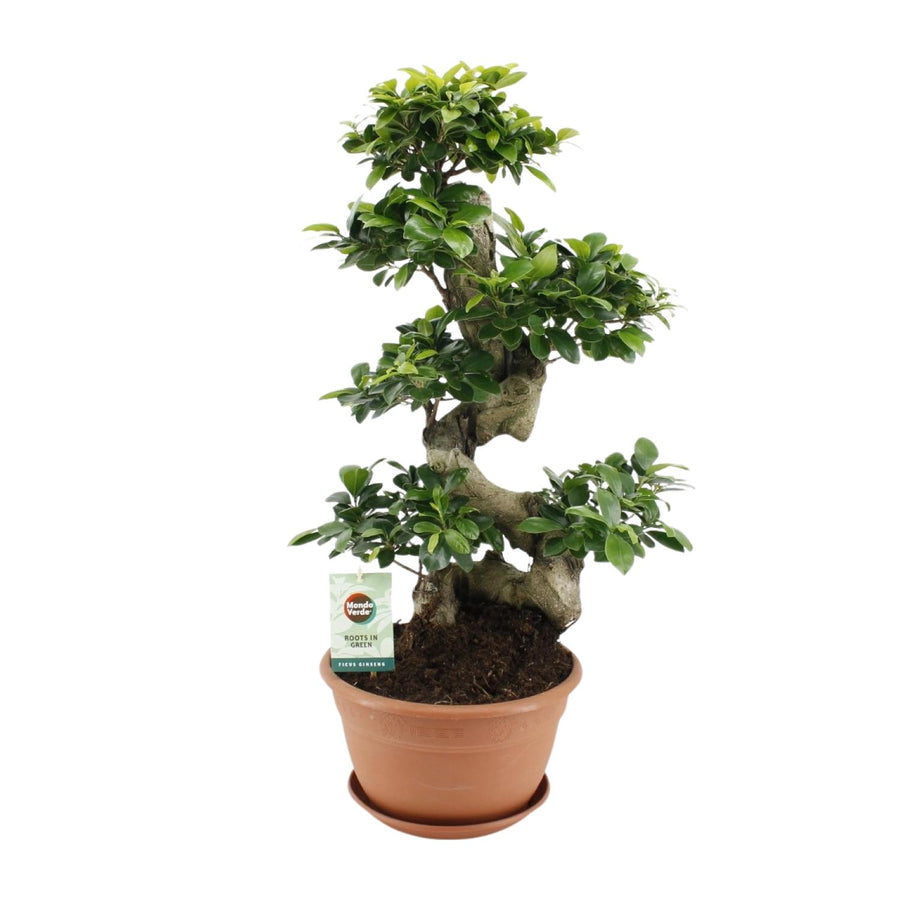
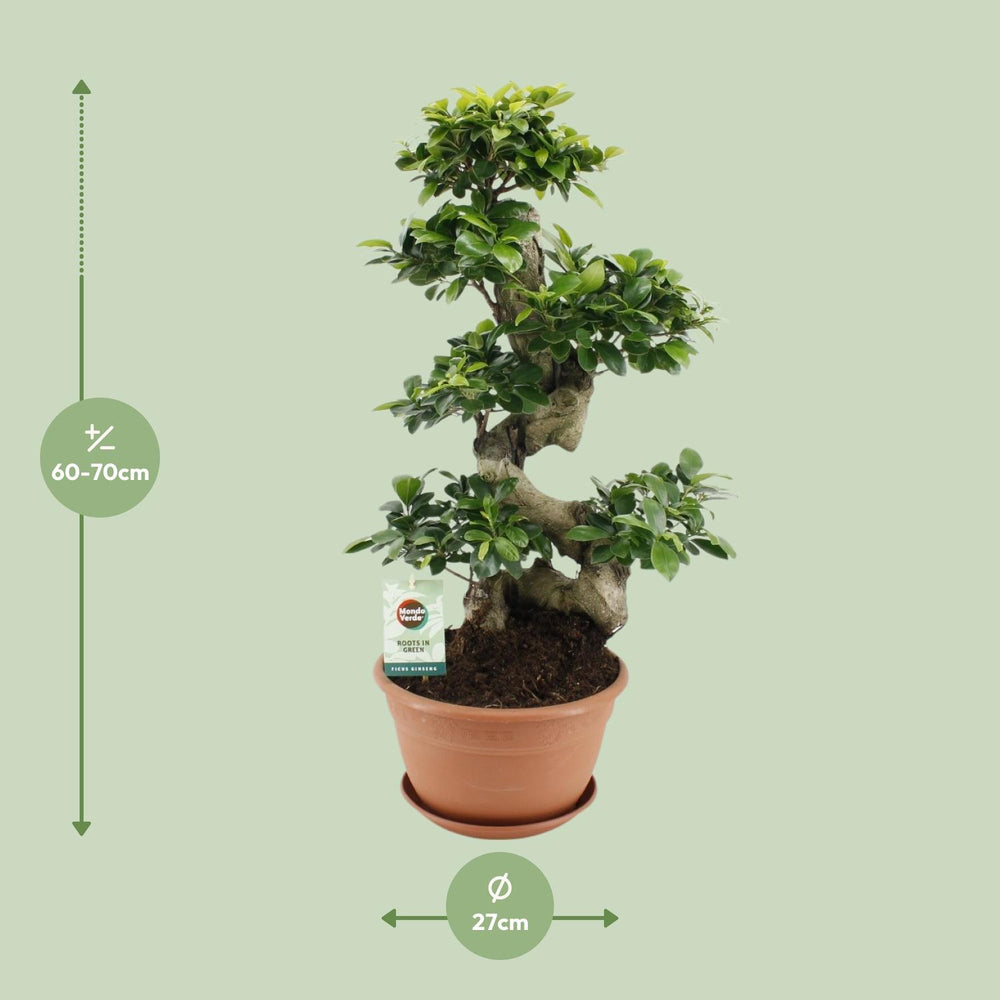
An olive tree carries the right symbolism of long life and continuity if there is a sunny garden or patio. Indoors, a ginseng fig bonsai (Ficus microcarpa, the classic beginner bonsai) gives the recipient a small daily ritual of care. Ficus likes bright indirect light and water when the top layer is dry; keep it away from pets that chew leaves.
For the loss of a pet
The loss of a pet is often under-acknowledged, and a small gesture says it mattered. An open terrarium with Calathea and Fittonia is quiet in scale, and both plants are listed as non-toxic to cats and dogs by the ASPCA, which matters in a home that may still have other animals. Fittonia, the nerve plant from Peru, has vivid veined leaves and thrives in a terrarium's humidity.
For the loss of a child
Choose something gentle and modest: a small peace lily, or a pet-safe Calathea. Avoid anything large or showy. In this situation the words matter as much as the plant; keep them simple (see the message guidance below).
For a colleague or a professional condolence
A peace lily or a ZZ plant (Zamioculcas zamiifolia, from eastern Africa) works at home or in an office. The ZZ stores water in thick underground rhizomes, needs water only every 2–3 weeks and copes with dim rooms, so it suits someone who has no energy for plant care; keep it away from pets that chew leaves.


How do sympathy plants compare?
Use this table to match a sympathy plant to the recipient's light, routine and household. Pet safety follows the ASPCA toxic and non-toxic plant lists; where we have not verified a plant, we make no claim.
| Plant | Latin name | Light | Watering | Pet-safe? | Best for |
|---|---|---|---|---|---|
| Peace lily | Spathiphyllum | Low to medium indirect | Keep lightly moist; droops when thirsty | No — keep away from pets that chew | The traditional sympathy plant |
| Olive tree | Olea europaea | Full sun | Let dry slightly between waterings | No claim made | Loss of a parent; garden memorial |
| Kentia palm | Howea forsteriana | Bright indirect to fairly low | When top 3–4cm is dry | Yes (ASPCA non-toxic) | A long-lived presence; homes with pets |
| Cast iron plant | Aspidistra elatior | Low; tolerates deep shade | Sparingly | Yes (ASPCA non-toxic) | Older recipients; dark hallways |
| Calathea | Calathea makoyana | Medium indirect, no sun | Evenly moist, rain or filtered water | Yes (ASPCA non-toxic) | Quiet reflection; homes with pets |
| Parlour palm | Chamaedorea elegans | Low to medium indirect | When top few cm are dry | Yes (ASPCA non-toxic) | Small flats; homes with pets |
| Bird's nest fern | Asplenium | Low to medium indirect | Keep moist, around the rosette | Not listed by the ASPCA; keep away from pets that chew | Humid bathroom or kitchen; pets |
| Ginseng fig bonsai | Ficus microcarpa | Bright indirect | When top layer is dry | No — keep away from pets that chew | A companion to tend; loss of a parent |
| ZZ plant | Zamioculcas zamiifolia | Low to bright indirect | Every 2–3 weeks | No — keep away from pets that chew | Someone with no energy for plant care |
What should I write on a sympathy plant message?
The best sympathy message is short, sincere and personal: one or two sentences, the name of the person who died if you knew them, and a sign-off with the name the family will recognise. Nobody expects eloquence. One honest line is worth more than a paragraph of platitudes, and avoid phrases that explain the loss away ("everything happens for a reason").
How to include it: a handwritten gift message is available on selected gift plants — you'll see the option on the product page. If the plant you have chosen does not offer it, post a short card separately or send a text to say a plant is on its way; either way, the family knows who was thinking of them. For more on wording across all occasions, see our guide to personalised plant gifts and messages.
For close family
- "In loving memory of [Name]. May this plant be a small, living reminder of them. With deepest sympathy, [Your name]."
- "[Name] was so dearly loved. Thinking of you all. With love, [Your name]."
- "Ar dheis Dé go raibh a anam. Thinking of you and the family at this time." (Use "a hanam" for a woman. The phrase means "May his or her soul be at God's right hand.")
For friends
- "There are no words. Just so very sorry. Thinking of you. [Your name]"
- "Remembering [Name] with great fondness. May this bring a little calm to your home in the weeks ahead."
Reflective or faith-based
- "May this plant bring a quiet moment of peace in the days ahead."
- "May [he/she] rest in peace, and may you find comfort in your faith. Praying for you all."
From a colleague or company
- "Our sincere condolences from everyone at [company]. Thinking of you and your family."
- "With deepest sympathy on your loss. From all your colleagues at [team]."
When should you send a sympathy plant in Ireland?
Send a sympathy plant to the family home to arrive in the days or weeks after the funeral, rather than for the funeral itself. Irish funerals usually take place within a few days of a death, and our delivery takes 5–8 working days (delivery times can vary), so a plant ordered on hearing the news will almost always arrive afterwards. That is often a better moment: the house is quieter, the flowers from the funeral have faded, and the family has time to receive a living gift properly.
- Straight away: order as soon as you hear, addressed to the family home.
- The month's mind or an anniversary: a plant on the month's mind Mass, the first anniversary or a first birthday without the person is unexpectedly meaningful. Order at least two weeks ahead.
- Christmas: the first Christmas after a bereavement is hard. Order by 10 December for Christmas delivery.
Delivery is tracked, so you can see when the plant has arrived and follow up with a call if it feels right. Plants that arrive damaged, diseased or in poor condition are replaced or refunded.
Can I send a sympathy plant to someone elsewhere in Europe?
Yes. PlantGift delivers free to Ireland and 24 more EU countries, 25 in total, including Germany, France, the Netherlands, Spain and Poland, tracked and in 5–8 working days. If a friend or relative has been bereaved in another EU country, you can order online and send the plant directly to their home without posting anything yourself. The same choice principles apply: a peace lily as the tradition, a pet-safe palm where there are animals. Our guide to sending plants as gifts across Europe covers the practical details.
If you live outside Ireland (in the UK, the USA or Australia, say) and a family at home has suffered a loss, you can order online and have a plant delivered to their Irish address. Our guide to sending plant gifts to Ireland from abroad has country-specific pages for the USA, the UK and Australia.
What is a good memorial plant for the garden?
For a permanent living memorial in an Irish garden, an olive tree is the most meaningful choice where there is a sunny, sheltered spot, and a Japanese maple in a pot suits a smaller garden or courtyard. Planting something in memory of a person gives the family a place to stand and remember, and a plant that returns each season.
The olive tree on a stem can live on a bright patio in the milder parts of Ireland, and moves indoors to the brightest window if the family prefers. A Japanese maple (Acer palmatum 'Garnet'), grown for its red foliage, is a quieter, compact choice for a pot by the back door or a bench. Either can be sent to the family home first and planted when they are ready; there is no hurry.

Frequently asked questions
Explore more plant gift guides
- Indoor plant gifts guide: how to choose a plant gift for any occasion in Ireland.
- Personalised plant gifts and message wording: what to write for every occasion.
- Sending plants as gifts across Europe: delivery to 25 EU countries explained.
- The gift that keeps growing: why potted plants outlast cut flowers.
- Pet-safe houseplants for cats and dogs: non-toxic alternatives in full.
- Low-light plants for dark rooms: plants for dim hallways and north-facing rooms.
- Plant gifts and potted plant gifts ready to send: the full gift range.
- Low-light plants and pet-safe plants: shop by the recipient's home.
- How to make a graveside planter: plants, pots and planting steps for a lasting grave planter.
Leave a comment