



Valentine's Day Plant Gifts: Romantic, Long-Lasting Alternatives to Cut Roses
The best Valentine's Day plant gifts are romantic plants that outlast a dozen cut roses by months or years: the Anthurium, with glossy heart-shaped blooms that last for months; the heart-leaf Philodendron, with trailing stems of heart-shaped leaves; the pink-striped Calathea, whose leaves fold up at night; a citrus tree with fragrant white flowers and real fruit; and a ginseng fig bonsai for a gift you look after together. Valentine's Day falls on Sunday 14 February 2027. Because delivery takes 5–8 working days, order at least two weeks ahead, by the end of January.
A bunch of cut roses is at its best for a few days. A potted plant keeps going: an Anthurium flowers for months in a bright, warm room, and a citrus tree can bloom and fruit again the following year. If you want a Valentine's gift that is still on the windowsill next February, give something with roots. For every other occasion, see our indoor plant gifts guide.
What is the most romantic plant to give for Valentine's Day?
The most romantic Valentine's Day plant is the Anthurium. Its glossy, heart-shaped blooms make it a long-lasting romantic gift, and it keeps flowering for months in a bright, warm room. If your partner has cats or dogs, choose a pink-striped Calathea instead, which is listed as non-toxic to cats and dogs by the ASPCA. For someone who loves scent, a citrus tree brings fragrant white flowers into the house.
A Valentine's plant works best when it fits both the person and their home: how much light they have, whether they have pets, and whether they like looking after things or prefer something easy. Each plant below has a short profile covering where it comes from, how much light and water it needs, whether it is pet-safe, and why it suits Valentine's Day. Browse all plant gifts, or go straight to potted plant gifts ready to send.
Why is the Anthurium the classic Valentine's plant?
The Anthurium is the classic Valentine's plant because its glossy, heart-shaped blooms look like a romantic bouquet but last for months instead of days.
Anthurium (flamingo flower)
The Anthurium comes from Colombia and Ecuador. It wants bright indirect light and water when the top layer of compost dries. Keep it away from pets that chew leaves. In a bright, warm Irish room it flowers for months, which in February means a windowsill that gets the weak winter sun but isn't directly above a hot radiator or against cold glass at night.
Why it suits Valentine's Day: heart-shaped blooms, a long flowering season and a gift that is still flowering well after 14 February.

Anthurium (flamingo flower), 30cm pot
Which plants have heart-shaped leaves?
The heart-leaf Philodendron is the easiest plant with heart-shaped leaves: a fast-growing trailing plant that suits a shelf, a mantelpiece or a hanging pot.
Heart-leaf Philodendron (Philodendron scandens)
Philodendrons come from tropical Central and South America. The heart-leaf Philodendron likes medium to bright indirect light and water when the top few centimetres are dry. Keep it away from pets that chew leaves. It is adaptable and fast-growing in ordinary room conditions, so it copes well with a typical Irish living room. Let it trail from a high shelf, or train it around a window frame. The 120cm trailing plant makes an instant display, and the smaller 14cm pot is a sweet desk-sized gift that will grow with the relationship. For care tips, see our Monstera and Philodendron care guide.
Why it suits Valentine's Day: every leaf is a heart, and a trailing plant that keeps growing makes a quietly sentimental gift.


Heart-Leaf Philodendron (Philodendron scandens), 14cm pot
What is a pet-safe Valentine's plant?
The Calathea is the best pet-safe Valentine's plant: it is listed as non-toxic to cats and dogs by the ASPCA, and the pink-striped Calathea ornata brings a Valentine's colour without any flowers.
Calathea (Calathea ornata and Calathea makoyana)
Calatheas come from the tropical Americas; C. makoyana, the peacock plant, is from eastern Brazil. They want medium indirect light, with no direct sun, and compost kept evenly moist, ideally with rain or filtered water. They are listed as non-toxic to cats and dogs by the ASPCA. A Calathea loves the humidity of an Irish bathroom or kitchen, and in a centrally heated room in February it appreciates being grouped with other plants. Its painted, patterned leaves fold up at night and open again in the morning, a small daily ritual for the two of you to notice. More ideas in our pet-safe plants guide and the pet-safe plants collection.
Why it suits Valentine's Day: pink pinstripes for colour, and a plant that is safe to leave where a cat or dog can reach it.

Pink-Striped Calathea (Calathea ornata) 17cm pot

Peacock Plant (Calathea makoyana) 40–50cm
Which Valentine's plants have fragrant flowers?
A citrus tree is the best fragrant Valentine's plant: the calamondin and lemon both produce scented white flowers, followed by real fruit.
Citrus: calamondin and lemon
Cultivated citrus are hybrids of Asian origin; the calamondin (Citrus × microcarpa) comes from the Philippines and southern China. Citrus wants full sun, so in February give it the brightest window in the house. Keep the compost evenly moist and never let it sit in water. Keep it away from pets that chew leaves. From late spring it can go out onto a sheltered patio, then come back indoors or into a cool, bright porch before the first frost. A citrus tree turns a sunny kitchen into somewhere that smells of blossom, and the fruit is a bonus.
Why it suits Valentine's Day: fragrance is romantic, and fruit you have grown together is a gift that keeps paying out.


Is a bonsai a good Valentine's gift?
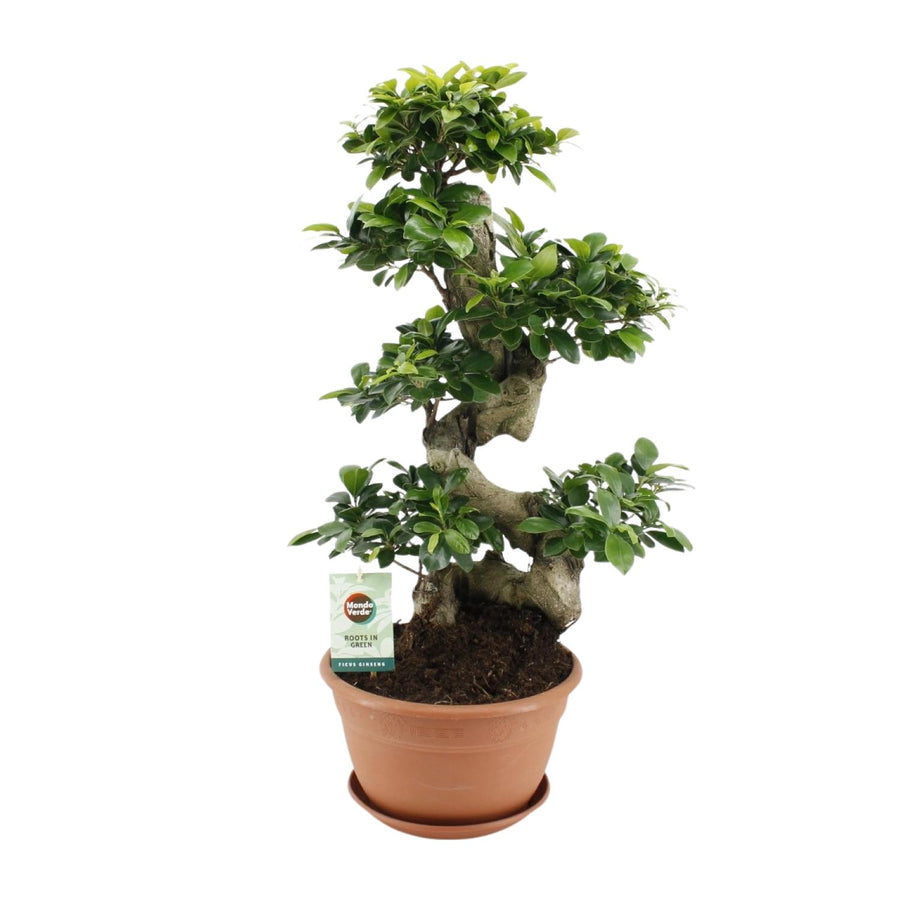
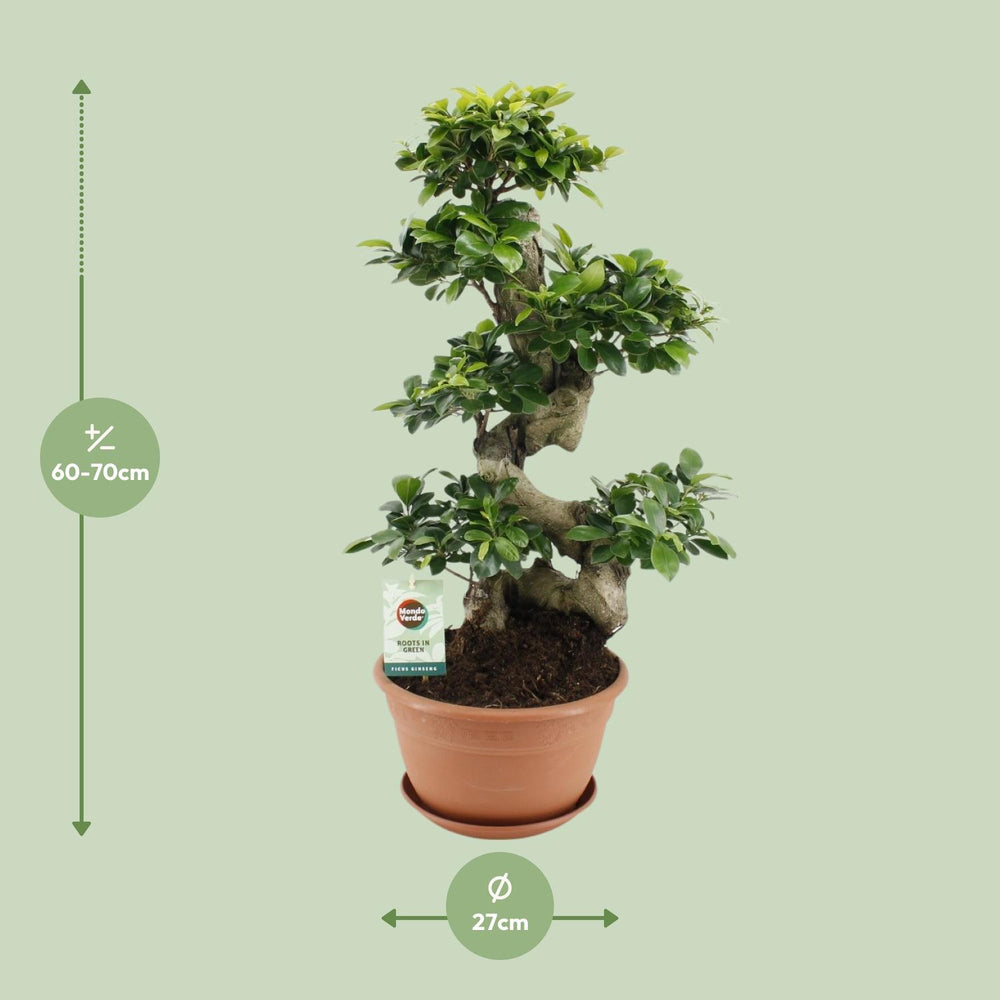
Yes: a ginseng fig bonsai is a thoughtful Valentine's gift for a couple, because it is the classic beginner bonsai and something you can shape and care for together over years.
Ginseng fig bonsai (Ficus microcarpa)
Ficus species come from South and Southeast Asia to Australia. The ginseng fig wants bright indirect light and water when the top layer is dry. Keep it away from pets that chew leaves. It may drop some leaves after moving house or after delivery, then settles within a few weeks, so don't panic in the first fortnight. Its thick, sculptural roots make it look like an ancient tree in miniature. For more on the genus, see the best Ficus plants for Irish homes.
Why it suits Valentine's Day: a bonsai is a long-term shared project, which is quite a romantic idea.

How do these Valentine's plants compare?
This table compares the featured Valentine's plants by light, watering, pet safety and the kind of partner each suits best.
| Plant | Latin name | Light | Watering | Pet-safe? | Best for |
|---|---|---|---|---|---|
| Anthurium | Anthurium | Bright indirect | When the top layer dries | No, keep away from chewing pets | The classic romantic; flower lovers |
| Heart-leaf Philodendron | Philodendron scandens | Medium to bright indirect | When the top few cm are dry | No, keep away from chewing pets | Shelves and mantelpieces; easy care |
| Pink-striped Calathea | Calathea ornata | Medium indirect, no direct sun | Evenly moist | Yes (ASPCA non-toxic) | Homes with cats or dogs |
| Peacock plant | Calathea makoyana | Medium indirect, no direct sun | Evenly moist | Yes (ASPCA non-toxic) | Pet owners; humid bathrooms |
| Calamondin | Citrus × microcarpa | Full sun | Evenly moist, never waterlogged | No, keep away from chewing pets | Scent lovers; sunny kitchens |
| Lemon tree | Citrus | Full sun | Evenly moist, never waterlogged | No, keep away from chewing pets | Cooks; sunny patios in summer |
| Ginseng fig bonsai | Ficus microcarpa | Bright indirect | When the top layer is dry | No, keep away from chewing pets | Couples who like a shared project |
When should I order a Valentine's plant for delivery in Ireland?
Order your Valentine's plant by the end of January, at least two weeks before Valentine's Day on Sunday 14 February 2027. Delivery is free to Ireland and 24 more EU countries (25 in total), takes 5–8 working days and is tracked, but delivery times can vary, and there is no same-day or next-day delivery. Because deliveries arrive on working days and 14 February 2027 is a Sunday, a plant ordered too late will not arrive on the day itself.
If the plant arrives a few days early, that is no bad thing. Keep it somewhere cool and bright, away from radiators, and water only if the compost feels dry. Our healthy-arrival guarantee means that plants which arrive damaged, diseased or in poor condition are replaced or refunded. Sending to someone in another EU country? Read our guide to sending plants as gifts across Europe.
How do I look after a Valentine's plant in an Irish February?
Unbox the plant straight away, give it the brightest spot that suits its type, keep it away from hot radiators and cold night-time glass, and water sparingly until spring. February is the darkest, slowest part of the growing year in Ireland, so most plants need less water than you'd expect.
- Unbox promptly. A plant left in its box in a cold hallway suffers. Open it on the day it arrives.
- Light first. Citrus wants the sunniest window; the Anthurium and Philodendron like bright indirect light; the Calathea wants medium light with no direct sun.
- Avoid the radiator shelf. Hot, dry air rising from a radiator is hard on leaves, especially the Calathea's.
- Water by touch, not calendar. Check the compost with a finger. In February, most plants dry out slowly.
- Don't repot until spring. Let the plant settle in its nursery pot first.
Frequently asked questions
Explore more plant gift guides
- Indoor plant gifts guide: the hub for every occasion and recipient.
- Mother's Day plant gifts: Mother's Day in Ireland is Sunday 7 March 2027.
- Birthday plant gifts by recipient: for beginners, pet owners and collectors.
- Personalised plant gifts: how to add a personal touch to a plant.
- Potted plant gifts and pet-safe plants: ready to send.
Leave a comment