



Christmas Plants Ireland: Evergreen Gifts and Festive Plants
The best Christmas plants to buy in Ireland fall into two groups: long-lasting evergreen gifts for indoors, such as the Kentia palm, calamondin citrus, olive tree and ficus ginseng bonsai, and hardy festive plants for doorsteps and gardens, such as the Christmas rose, skimmia, ivy and small potted spruce. Holly and ivy are the traditional Irish Christmas pair; we stock ivy and, for now, not true holly. We do not sell poinsettias, Christmas cactus or amaryllis, which are tender seasonal indoor plants, and focus instead on plants that last. Order by 10 December for Christmas delivery. For planting ideas, see our guide to Christmas planters, or browse plant gifts.
Order by 10 December for Christmas delivery. Delivery is free to Ireland and 24 more EU countries, tracked, and usually takes 5–8 working days. Delivery times can vary in the busy weeks before Christmas, so earlier is always safer.
What are the best Christmas plants to send in Ireland?
The best Christmas plant gifts for Irish homes are the Kentia palm, the calamondin orange tree, the olive tree, the white bird of paradise and the ficus ginseng bonsai, because each one is evergreen, copes with an Irish winter indoors, and keeps going for years rather than weeks. Traditional seasonal plants are grown for a few weeks of colour and are often discarded in January. An evergreen gift carries the Christmas memory into spring, summer and the Christmases after that.
Think about the recipient's home before you choose. A bright south- or west-facing living room suits citrus, olive and Strelitzia. A cooler, dimmer room, the kind most Irish terraces and apartments have in December, suits a Kentia or parlour palm. A small flat or office desk suits a bonsai or terrarium. The comparison table further down sets all of this out side by side.
Why choose an evergreen plant instead of a poinsettia or amaryllis?
An evergreen plant is the better Christmas gift when you want something that lasts, because it looks as good in March as it does on Christmas morning. Poinsettias, Christmas cactus and amaryllis are lovely, but they are not in our range this season, and we would rather tell you that than send you to an empty product page. The plants in this guide are the ones we can actually deliver, healthy, before Christmas.
There is also a practical side. December is the darkest month in Ireland, and central heating dries the air in most homes. The plants below were chosen because their natural habits suit those conditions: palms that tolerate low light, citrus and olives that like a cool, bright spot, and compact bonsai and terrariums that sit happily on a windowsill.
Which palm makes the best Christmas gift?
The Kentia palm is the best palm to give at Christmas, because it is elegant, slow-growing and one of the few palms that copes with cool rooms and short Irish winter days. It is the natural indoor alternative to a Christmas tree for someone who wants greenery all year.
Kentia palm (Howea forsteriana)
The Kentia palm is native to Lord Howe Island, off eastern Australia. It grows in bright indirect to fairly low light and tolerates a north-facing room, so it suits the dim December living rooms of Irish homes. Water when the top 3–4cm of compost is dry, and less in winter. It is listed as non-toxic to cats and dogs by the ASPCA. This is the classic Victorian parlour palm: elegant, slow-growing and long-lived, which makes it a Christmas gift that is still in the family photos ten Christmases later.


Parlour palm (Chamaedorea elegans)
The parlour palm comes from the rainforests of southern Mexico and Guatemala. It is happy in low to medium indirect light and needs water when the top few centimetres of compost are dry. It is listed as non-toxic to cats and dogs by the ASPCA, and it is one of the best palms for a dim Irish flat or office. Compact and forgiving, it is an easy first palm and a thoughtful small gift for a student, a new tenant or a colleague. Our palm plants collection has more sizes.
Which Christmas plant has festive fruit and scent?
A calamondin citrus tree is the most festive Christmas plant we sell, because it carries small orange fruits and fragrant white flowers, echoing the oranges of a traditional Irish Christmas stocking. A lemon tree offers the same appeal with yellow fruit.
Calamondin and lemon (Citrus)
Citrus are cultivated hybrids of Asian origin; the calamondin (Citrus × microcarpa) comes from the Philippines and southern China. Citrus want full sun, so give them the brightest window in the house, or a sheltered patio in summer. Keep the compost evenly moist but never let the pot sit in water. In Ireland, bring a citrus indoors or into a cool, bright porch before the first frost. Keep away from pets that chew leaves. The hook is simple: fragrant white flowers and real fruit, on a plant that makes a December kitchen smell of summer.


What is the best statement plant to give for Christmas?
The white bird of paradise and the olive tree are the best statement Christmas gifts, because both are large, architectural and long-lived. Choose the Strelitzia for a bright modern living room and the olive for someone who loves the Mediterranean or has a sunny patio.
Olive tree (Olea europaea)
The olive tree is native to the Mediterranean basin. It needs full sun: the brightest window indoors, or a sheltered sunny patio in milder parts of Ireland. Let the compost dry slightly between waterings. The olive is the ancient symbol of peace, friendship and long life, which makes it a fitting Christmas gift for a family, a couple or an old friend. Our olive tree care guide for Ireland covers winter protection in detail.
White bird of paradise (Strelitzia nicolai)
The white bird of paradise comes from the coastal forests of eastern South Africa. It wants bright light, including some direct sun, and needs a bright south- or west-facing room to thrive in Ireland. Keep it evenly moist in summer and drier in winter. Keep away from pets that chew leaves. Its huge paddle-shaped leaves make it the ultimate statement plant. See our Strelitzia care guide.


What are the best small Christmas plant gifts?
The best small Christmas plant gifts are a ficus ginseng bonsai, a glass terrarium and a clipped holly topiary, because each one fits on a table or windowsill and still feels special. They also suit people who already have plenty of houseplants.
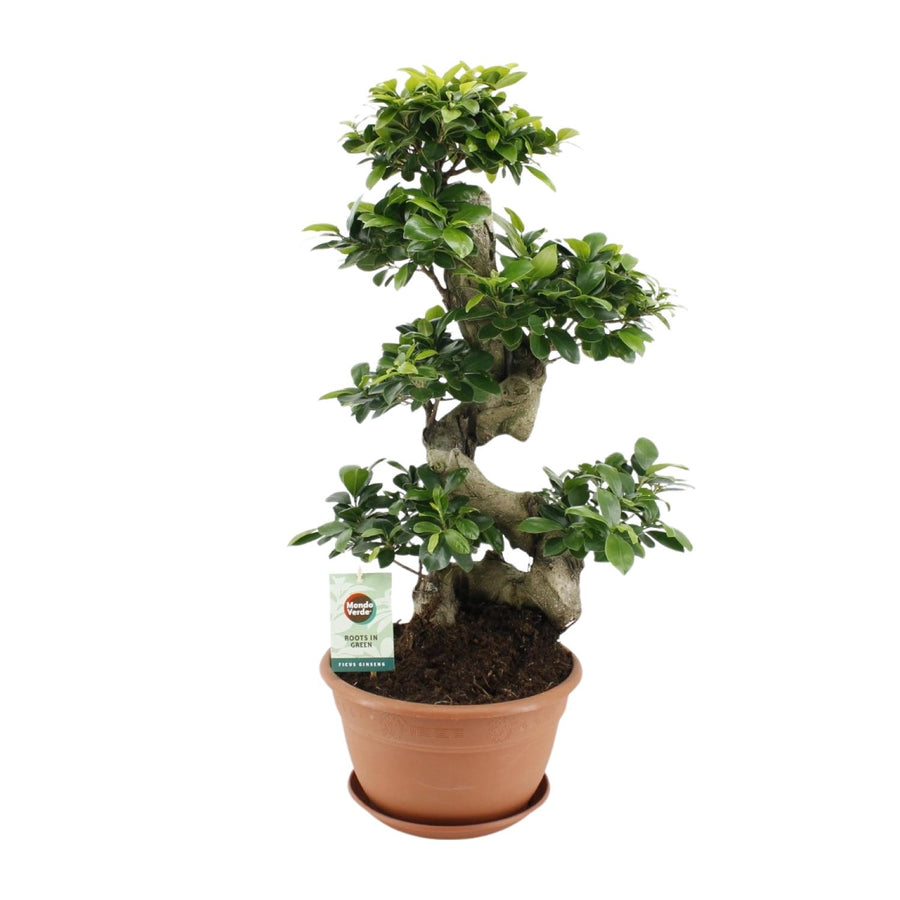
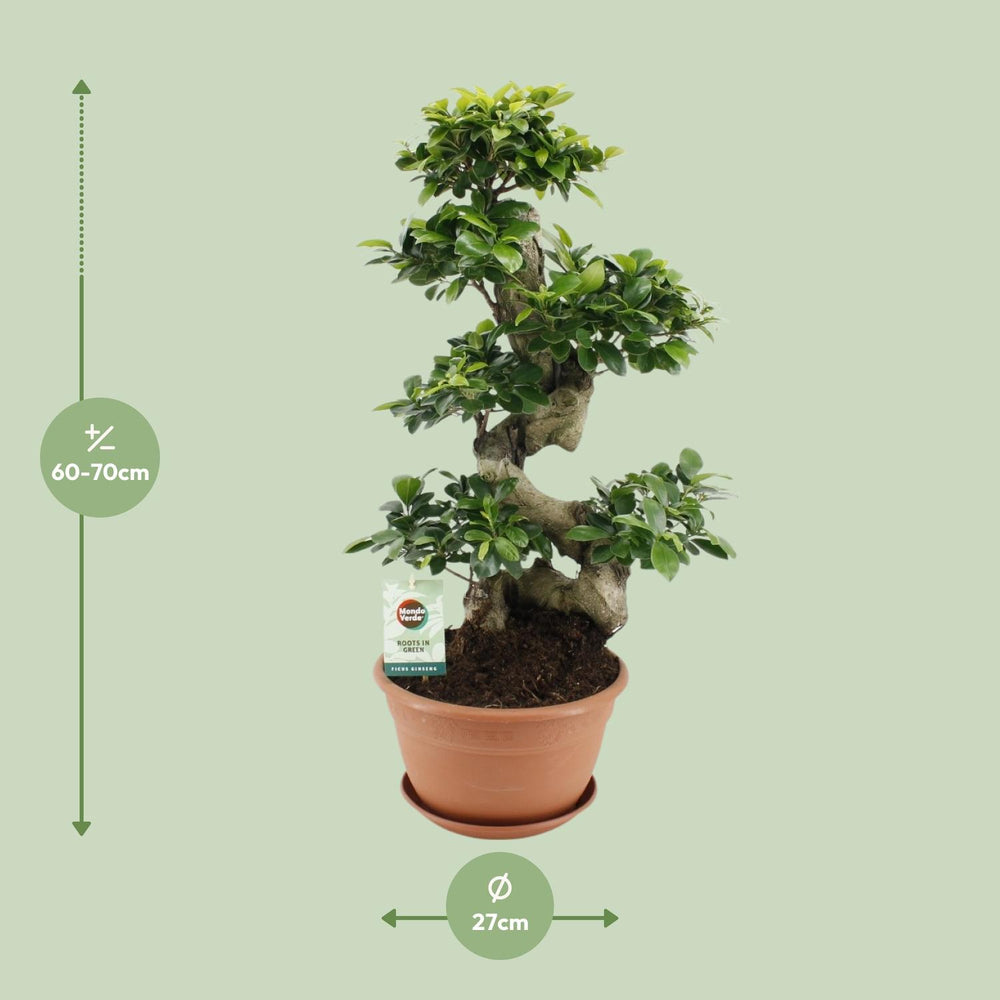
Ficus ginseng bonsai (Ficus microcarpa)
Ficus grow wild from South and Southeast Asia to Australia. The ginseng fig wants bright indirect light and needs water when the top layer of compost is dry. Keep away from pets that chew leaves. Do not panic if it drops a few leaves after the journey: ficus often do after moving house and settle within a few weeks. The ginseng fig is the classic beginner bonsai. Read more in our guide to ficus plants for Irish homes.
Terrariums with nerve plant (Fittonia)
The nerve plant comes from Peru and neighbouring South America. It likes medium indirect light and constant moisture, which is exactly why it thrives in the humidity of a terrarium. It is listed as non-toxic to cats and dogs by the ASPCA. With its vivid veined leaves, it is a terrarium staple. An open terrarium arrives planted; a DIY kit is a Christmas-holiday project for someone who likes to make things. Browse terrariums and glass ecosystems.


Evergreen holly topiary (Ilex crenata)
For a living tabletop Christmas tree, the Ilex crenata pyramid topiary is a Japanese holly clipped into a neat 55cm cone. It sits on a hall table or doorstep, takes a string of small lights, and stays green all year instead of heading to the recycling centre in January.

Which Christmas plants are safe for cats and dogs?
The Kentia palm, the parlour palm, the peacock plant (Calathea makoyana), the ponytail palm (Beaucarnea recurvata) and the nerve plant in our terrariums are all listed as non-toxic to cats and dogs by the ASPCA, which makes them the safest Christmas gifts for a home with pets. Citrus, Strelitzia, ficus and peace lilies should be kept away from pets that chew leaves.
Peacock plant (Calathea makoyana)
Calatheas come from the tropical Americas; C. makoyana is from eastern Brazil. It wants medium indirect light and no direct sun, and prefers evenly moist compost, ideally watered with rain or filtered water. It loves the humidity of a bathroom or kitchen. Its painted, patterned leaves fold up at night, a small daily show that children and adults both enjoy over the holidays.
Ponytail palm (Beaucarnea recurvata)
The ponytail palm comes from eastern Mexico, likes bright light including some direct sun, and needs water only sparingly, every 2–4 weeks, because its swollen base stores water. A sunny windowsill suits it, and it is almost impossible to kill by neglect: a quirky, sculptural gift for someone who is away a lot over Christmas.


For the full list, see our pet-safe plants guide and the pet-safe plants collection.
Is there a white-flowering plant for a Christmas table?
Yes: the peace lily (Spathiphyllum) is the white-flowering houseplant we recommend for a green-and-white Christmas scheme, because it flowers well even in the modest light of an Irish home in winter. It is native to the rainforest floors of tropical Central and South America and likes low to medium indirect light. Keep the compost lightly moist; it droops visibly when thirsty and recovers within hours of watering, which makes it forgiving for a busy host. Keep away from pets that chew leaves. Its white spathes return each year.

For a gardener, the Christmas rose (Helleborus niger), described below, is a traditional white-flowering choice for a shady border.
What are the traditional Christmas plants in Ireland, and which can you buy?
Holly and ivy are the traditional Irish Christmas pair, joined by mistletoe, Christmas roses and the Christmas tree itself. Real holly (Ilex aquifolium) is not in our range yet, but ivy, Christmas rose and skimmia are, along with dwarf spruce trees when in stock. These are hardy outdoor plants for pots and doorsteps rather than houseplants, and most keep going for years.
Christmas rose (Helleborus niger)
The Christmas rose is an evergreen perennial with white, golden-centred flowers. Despite the name, it usually flowers between January and March, with the occasional early bud in a mild spell, so treat it as a plant for the heart of winter. It likes part shade and good drainage, and suits a shady doorstep pot. Wear gloves when handling: it is harmful if eaten and the sap can irritate skin.
Ivy (Hedera)
Ivy is the other half of the traditional pair. Hedera helix 'Glacier' has silver-grey and white leaves that suit fairy lights, and Irish ivy (Hedera hibernica) has big, dark green leaves. Both trail over the rim of a winter pot and are evergreen. Ivy is harmful if eaten, so keep it away from pets that chew plants.
Skimmia
Skimmia 'Rubella' is a compact evergreen with glossy leaves and red flower buds that hold from autumn until they open as scented white flowers in spring. Our skimmias are male plants, grown for buds and flowers rather than berries.


To combine them in one pot, see our guide to Christmas planters and winter bloomers, which gives plant counts for 30, 40 and 50cm containers.
How do these Christmas plants compare?
| Plant | Latin name | Light | Watering | Pet-safe? | Best for |
|---|---|---|---|---|---|
| Kentia palm | Howea forsteriana | Bright indirect to fairly low | When top 3–4cm dry; less in winter | Yes (ASPCA) | Family home, dim living room |
| Parlour palm | Chamaedorea elegans | Low to medium indirect | When top few cm dry | Yes (ASPCA) | Small flat, colleague, student |
| Calamondin citrus | Citrus × microcarpa | Full sun | Evenly moist, never waterlogged | No, keep away from pets | Food lovers, sunny kitchen |
| Olive tree | Olea europaea | Full sun | Dry slightly between waterings | No claim made | Couples, families, a symbol of peace |
| White bird of paradise | Strelitzia nicolai | Bright, some direct sun | Moist in summer, drier in winter | No, keep away from pets | Statement gift, bright modern home |
| Ficus ginseng bonsai | Ficus microcarpa | Bright indirect | When top layer dry | No, keep away from pets | Desk, windowsill, bonsai beginner |
| Terrarium with Fittonia | Fittonia | Medium indirect | Keep moist | Yes (ASPCA) | Small spaces, makers |
| Peacock plant | Calathea makoyana | Medium indirect, no direct sun | Evenly moist, rain or filtered water | Yes (ASPCA) | Homes with pets |
| Ponytail palm | Beaucarnea recurvata | Bright, some direct sun | Every 2–4 weeks | Yes (ASPCA) | Busy or often-away recipients |
| Peace lily | Spathiphyllum | Low to medium indirect | Lightly moist | No, keep away from pets | White Christmas table |
| Christmas rose | Helleborus niger | Part shade | Moist but well drained | No, harmful if eaten | Shady doorstep, gardeners |
| Skimmia | Skimmia japonica | Part shade to shade | Regularly in pots | No claim made | Winter door pots |
| Ivy 'Glacier' | Hedera helix | Sun or shade | When top 2-3cm dry | No, harmful if eaten | Trailing over pots |
When should I order Christmas plants for delivery in Ireland?
Order by 10 December for Christmas delivery in Ireland. Standard delivery is free to Ireland and 24 more EU countries (25 in total), tracked, and usually takes 5–8 working days, but delivery times can vary, especially in the final weeks before Christmas. If the gift is for a particular day, such as a Christmas party or a visit, allow at least two weeks.
- Healthy arrival: plants that arrive damaged, diseased or in poor condition are replaced or refunded under our healthy-arrival guarantee.
- A personal note: a handwritten gift message is available on selected gift plants — you'll see the option on the product page.
- Sending abroad: for family elsewhere in Europe, our guide to sending plants as gifts across Europe explains how it works.
- Workplace gifts: ordering for a team? Our corporate plant gifts guide covers Christmas gifting at scale.
How do I keep a Christmas plant healthy through an Irish winter?
The three rules for keeping a Christmas plant healthy in an Irish winter are: keep it away from radiators and draughty front doors, give it the best light you have, and water less than you would in summer. Most winter plant losses come from a warm, dry spot beside a radiator or from compost that stays wet in low light.
- Light first. December light in Ireland is weak. Citrus, olive and Strelitzia belong in the brightest window; Kentia and parlour palms cope further back in the room.
- Water to the plant, not the calendar. Check the compost with a finger. The Kentia wants the top 3–4cm dry; the ponytail palm can go 2–4 weeks; calathea and nerve plant like steady moisture.
- Mind the heat. Keep plants a little way from radiators, stoves and open fires, and away from the blast of cold air by the front door.
- Expect a settling-in period. A ficus may drop a few leaves after its journey; it usually settles within a few weeks.
Frequently asked questions
Explore more plant gift guides
- Christmas planters and winter bloomers: thriller, filler and spiller pots for Irish doorsteps
- Christmas and winter plants: Christmas rose, skimmia, ivy and more
- Indoor plant gifts guide: the best houseplants to give for every occasion
- Plant gifts for plant lovers: ideas for people who already have everything green
- Specialty and statement plant gifts: bonsai, terrariums and showpiece plants
- Personalised plant gifts: how gift messages work
- Corporate plant gifts: Christmas gifts for teams and clients
- Pet-safe plants: non-toxic houseplants for cats and dogs
- Plant gifts and potted plant gifts ready to send
- Palm plants and terrariums
More winter and Christmas plants: winter colour plants for pots and borders, plants for winter pots, Christmas rose hellebores, living Christmas trees and dwarf conifers, festive foliage and berries, winter houseplant care guide, Christmas plant care checklist.
Leave a comment