



Best Specialty Plant Gifts in Ireland: Statement Plants, Living Sculpture & Terrariums
The best specialty plant gifts in Ireland are plants that are extraordinary in themselves: a 130cm Kentia palm (Howea forsteriana), a giant-leaved white bird of paradise (Strelitzia nicolai), a sculptural ginseng fig bonsai (Ficus microcarpa) or ponytail palm (Beaucarnea recurvata), a fruiting calamondin, or a DIY glass terrarium to build. A specialty gift makes the entrance whether or not the recipient knows anything about plants. That is the difference from our gifts for plant lovers guide, which is written for buying for enthusiasts and collectors.
For a broader view of every plant and recipient, see our indoor plant gifts guide. Every plant below is in stock, with free tracked delivery to Ireland and 24 more EU countries.
What makes a plant gift "specialty" rather than an ordinary houseplant?
A specialty plant gift stands out for at least one of four reasons: scale (a specimen of 1m or more that changes a room), form (a sculptural trunk, braided stem or bonsai shape), experience (a terrarium or hydroponic display the recipient builds or watches grow in glass), or reward (flowers and fruit, like a citrus or olive). An ordinary houseplant is a pleasant add-on; a specialty plant is the whole present.
- Immediate impact: it looks finished the moment it is unpacked, with no need to wait years for it to grow.
- A story to tell: Victorian parlour palms, ancient olive symbolism, the bonsai tradition. Each gift comes with a history the giver can share.
- Staying power: slow-growing, long-lived plants such as the Kentia palm stay with the recipient for years.
What are the best large statement plants to give in Ireland?
The best large statement plants to give in Ireland are the Kentia palm (130cm), the white bird of paradise (100cm), the Monstera deliciosa (105cm), the multicoloured Croton 'Magnificent' (110cm) and, tallest of all, the Dracaena 'Lemon Lime' at 170–190cm.
Kentia palm: the statement plant for any room
The Howea forsteriana comes from Lord Howe Island, off eastern Australia. It is the classic Victorian parlour palm: elegant, slow-growing and long-lived. It takes bright indirect to fairly low light and tolerates a north-facing room. Water it when the top 3–4cm of compost is dry, and less in winter. It is one of the few palms that copes with cool rooms and short Irish winter days, and it is listed as non-toxic to cats and dogs by the ASPCA, so it is the safest large gift when you don't know the recipient's home.
White bird of paradise: the ultimate statement plant
Strelitzia nicolai comes from the coastal forests of eastern South Africa and grows huge, paddle-shaped leaves. It needs bright light, including some direct sun, and evenly moist compost in summer, drier in winter. In an Irish home it needs a bright south- or west-facing room to thrive. Keep it away from pets that chew leaves.


Monstera deliciosa: the iconic split-leaf houseplant
Monstera deliciosa grows in tropical forests from southern Mexico to Panama. It is the iconic split-leaf houseplant, and a 105cm specimen already carries the deeply cut leaves people picture. It wants bright indirect light and water when the top 5cm of compost is dry. It grows steadily in a bright Irish living room and slows right down in winter. Keep it away from pets that chew leaves. See our Monstera care guide.
Croton 'Magnificent': living colour
Codiaeum variegatum comes from Indonesia and Malaysia to the western Pacific and has vivid red, orange and yellow foliage. It needs bright light and evenly moist compost, and a bright, warm spot keeps its colour through an Irish winter. Keep it away from pets that chew leaves. It is the gift for someone who wants colour without cut flowers.


Dracaena 'Lemon Lime': floor-to-ceiling height
The dragon tree group comes from tropical Africa (D. fragrans) and Madagascar (D. marginata). At 170–190cm, the striped 'Lemon Lime' is tall and structural and makes an instant impact in a new home or office. It wants medium to bright indirect light and water when the top half of the compost is dry, and it tolerates the dry air of centrally heated homes better than most. Keep it away from pets that chew leaves.

Which plants make a sculptural, living-art gift?
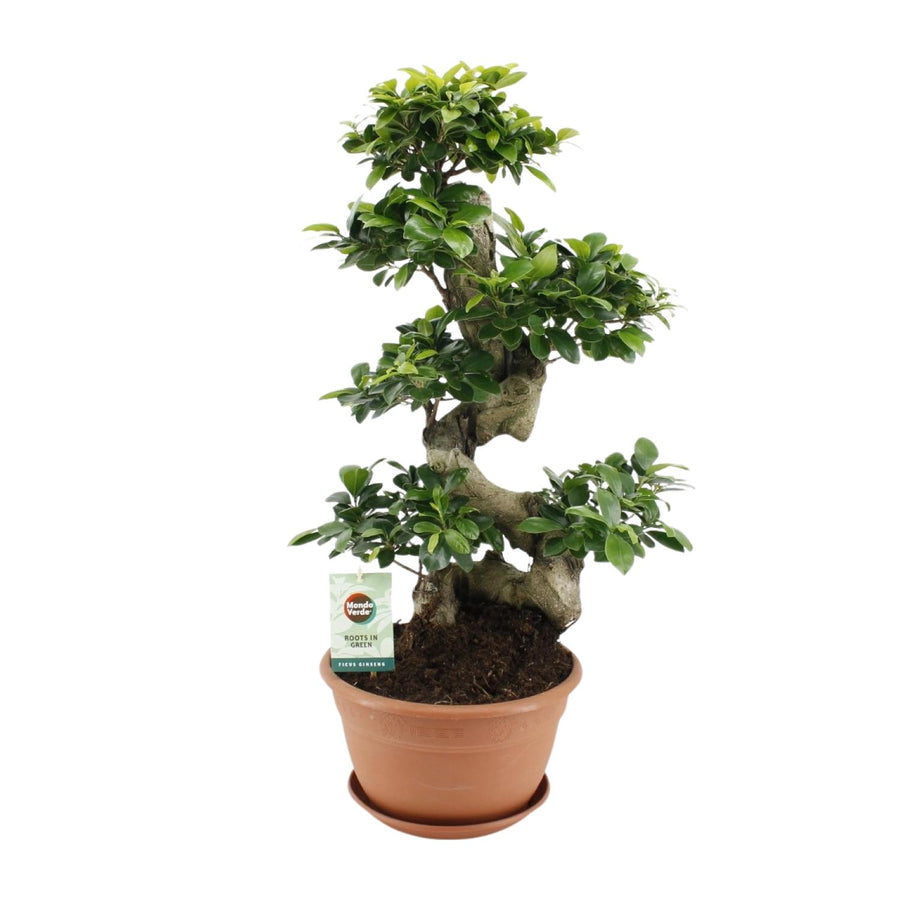
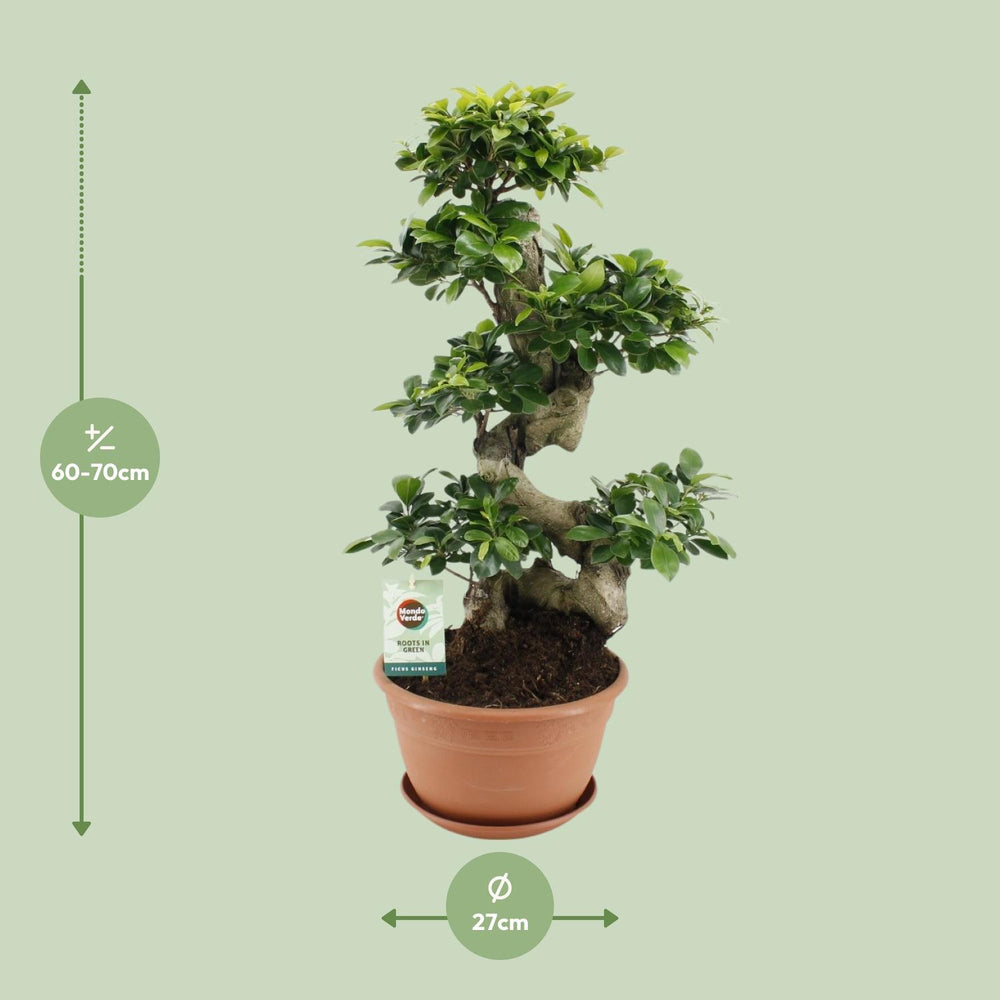
For a gift that looks like sculpture, choose a ginseng fig bonsai (Ficus microcarpa) with its swollen roots, or a tall ponytail palm (Beaucarnea recurvata) with its elephant's-foot base and fountain of leaves.
Ginseng fig: the classic beginner bonsai. Ficus comes from South and Southeast Asia to Australia. It wants bright indirect light and water when the top layer is dry. It may drop leaves after moving house and settles within a few weeks, so tell the recipient not to worry. Keep it away from pets that chew leaves. Ponytail palm: from eastern Mexico, it stores water in its swollen base, needs watering only every 2–4 weeks and likes bright light, including some direct sun. It is almost impossible to kill by neglect and is listed as non-toxic to cats and dogs by the ASPCA, which makes it a statement gift for a busy person.


Ponytail Palm — Beaucarnea recurvata 110–130cm
More on the genus in our Ficus guide for Irish homes.
Which specialty plants flower or fruit?
A calamondin (Citrus × microcarpa) gives fragrant white flowers and real fruit, and an olive tree (Olea europaea) carries the ancient symbolism of peace, friendship and long life.
Calamondin: from the Philippines and southern China. It needs full sun (the brightest window, or a sheltered patio in summer) and evenly moist compost that never sits in water. Bring it indoors or into a cool, bright porch before the first frost, and keep it away from pets that chew leaves. Olive tree: from the Mediterranean basin. It needs full sun and should dry slightly between waterings. It suits the brightest window indoors, or a sheltered sunny patio in milder parts of Ireland. See our olive tree care guide for Ireland.


What are the most unique and creative plant gifts?
The most creative plant gifts are a DIY terrarium kit, where the recipient builds a miniature glass landscape, and a hydroponic glass display, where plants grow in water and the roots are part of the decoration.
DIY terrarium kits: a gift you build
A terrarium kit includes glass, plants, substrate layers and tools, and the recipient assembles a miniature landscape in an afternoon. Closed terrariums recycle moisture on the inside of the glass, so they need far less watering than a pot. Many kits use the nerve plant (Fittonia), from Peru and neighbouring South America. Its vivid veined leaves thrive in a terrarium's humidity, and it is listed as non-toxic to cats and dogs by the ASPCA, as are the Calathea species often planted alongside it. A terrarium makes a memorable birthday or anniversary gift because the recipient gets an experience as well as an object, and building one together is a lovely shared afternoon. More in the terrariums and glass ecosystems collection.

Glass Terrarium DIY Kit 30cm — Complete Set

Hydroponic displays: plants grown in water
Hydroponic gifts grow plants in water inside clear glass, so there is no compost to over- or under-water: the recipient simply tops up the water as the level drops. The Monstera and Clusia duo pairs the split-leaf Monstera with the rounded leaves of Clusia. The three-vase set adds its own LED light, useful for a dim Irish winter. Keep Monstera away from pets that chew leaves.


How do these specialty plant gifts compare?
This table compares each specialty gift by light, watering, pet safety and the kind of recipient it suits.
| Plant | Latin name | Light | Watering | Pet-safe? | Best for |
|---|---|---|---|---|---|
| Kentia palm 130cm | Howea forsteriana | Bright indirect to fairly low | When top 3–4cm are dry | Yes (ASPCA non-toxic) | Any home, even north-facing |
| White bird of paradise | Strelitzia nicolai | Bright, some direct sun | Moist in summer, drier in winter | No — keep from chewing pets | Bright south/west rooms |
| Monstera 105cm | Monstera deliciosa | Bright indirect | When top 5cm is dry | No — keep from chewing pets | An iconic living-room piece |
| Croton 'Magnificent' | Codiaeum variegatum | Bright | Evenly moist | No — keep from chewing pets | Lovers of colour |
| Dracaena 'Lemon Lime' | Dracaena | Medium to bright indirect | When top half is dry | No — keep from chewing pets | High ceilings, offices |
| Ginseng fig bonsai | Ficus microcarpa | Bright indirect | When top layer is dry | No — keep from chewing pets | A first bonsai |
| Ponytail palm | Beaucarnea recurvata | Bright, some direct sun | Every 2–4 weeks | Yes (ASPCA non-toxic) | Busy people, sunny rooms |
| Calamondin | Citrus × microcarpa | Full sun | Evenly moist, never waterlogged | No — keep from chewing pets | Flowers and fruit |
| Olive tree | Olea europaea | Full sun | Dry slightly between waterings | Not verified | Symbolic gifts, patios |
| DIY terrarium kit | Fittonia, Calathea | Medium indirect | Rarely, once established | Yes (ASPCA non-toxic plants) | Creative people, shared projects |
How should you present and time a specialty plant gift?
- Match the size to the space: a 130cm palm or 190cm Dracaena needs a floor corner; in an apartment, a bonsai, terrarium or hydroponic set may fit better.
- Match the light: for a dim or north-facing home, the Kentia palm is the statement plant that copes. Sun-lovers like citrus, olive and ponytail palm need the brightest window. See our low-light plants guide.
- Add a message: a handwritten gift message is available on selected gift plants — you'll see the option on the product page.
- Plan the date: delivery is free and tracked to Ireland and 24 more EU countries and takes 5–8 working days. Delivery times can vary, so order at least two weeks ahead, and by 10 December for Christmas.
- Someone to receive it: in winter, arrange delivery when someone is home so a large plant doesn't sit in a cold porch.
A 130cm Kentia palm or tall Dracaena suits a housewarming; a terrarium kit suits a birthday or anniversary; a calamondin suits Mother's Day (Sunday 7 March 2027); a bonsai or terrarium makes a lasting Christmas gift. For every occasion, see our plant gifts for every occasion index, and for business gifting, the corporate plant gifts guide.
Our healthy-arrival guarantee means plants that arrive damaged, diseased or in poor condition are replaced or refunded.
Leave a comment