

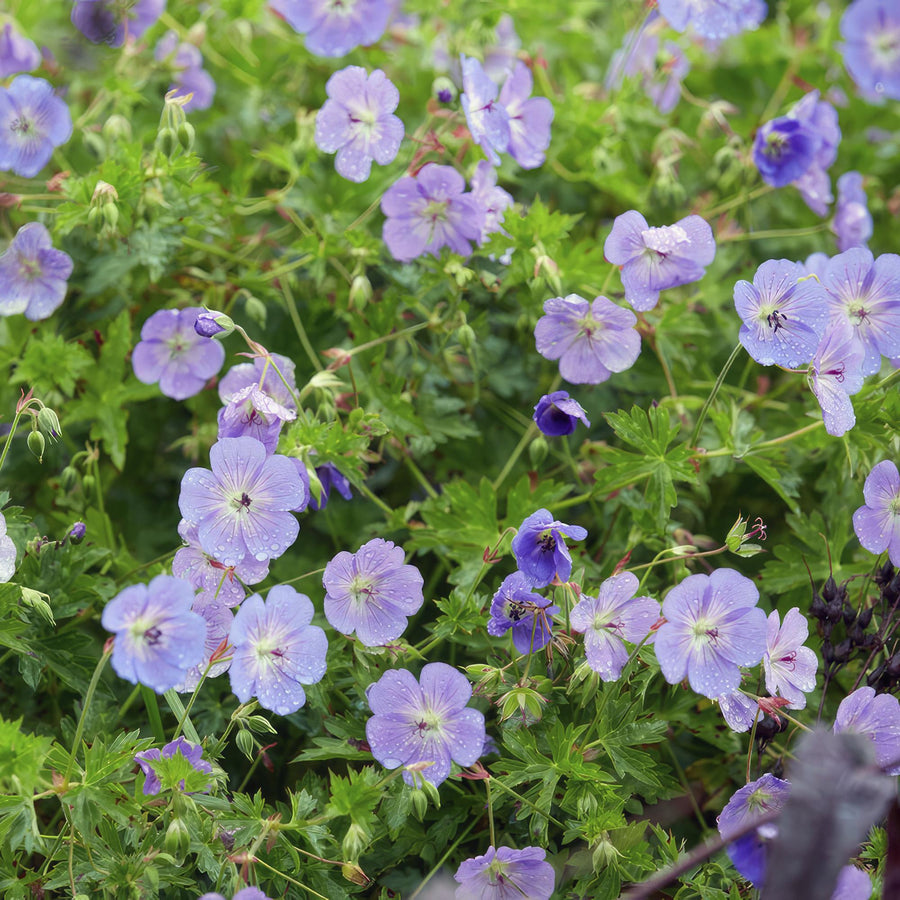


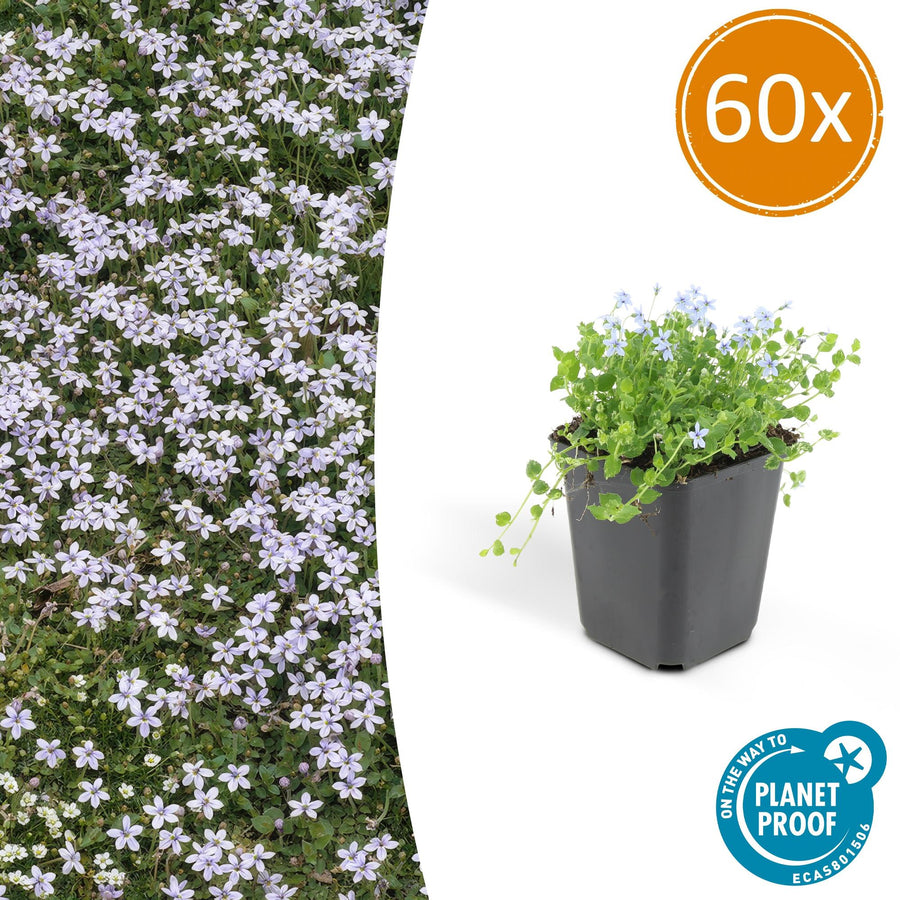
Blue star creeper (Isotoma fluviatilis, formerly Laurentia or Pratia) is a low, mat-forming perennial with tiny star-shaped pale blue flowers from late spring through summer. It grows a few centimetres tall, tolerates light foot traffic, and is popular between stepping stones and as a lawn substitute in small areas. Free delivery to 25 EU countries, usually 5–8 working days.


Which blue star creeper pack should you choose?
| Pack | Supplied as | Good for |
|---|---|---|
| Small pack (6 plants) | Plants in Ø9cm pots | Gaps between a few paving stones, a planter top |
| Medium pack (24 plants) | Plants in Ø9cm pots | A stepping-stone path or border edge |
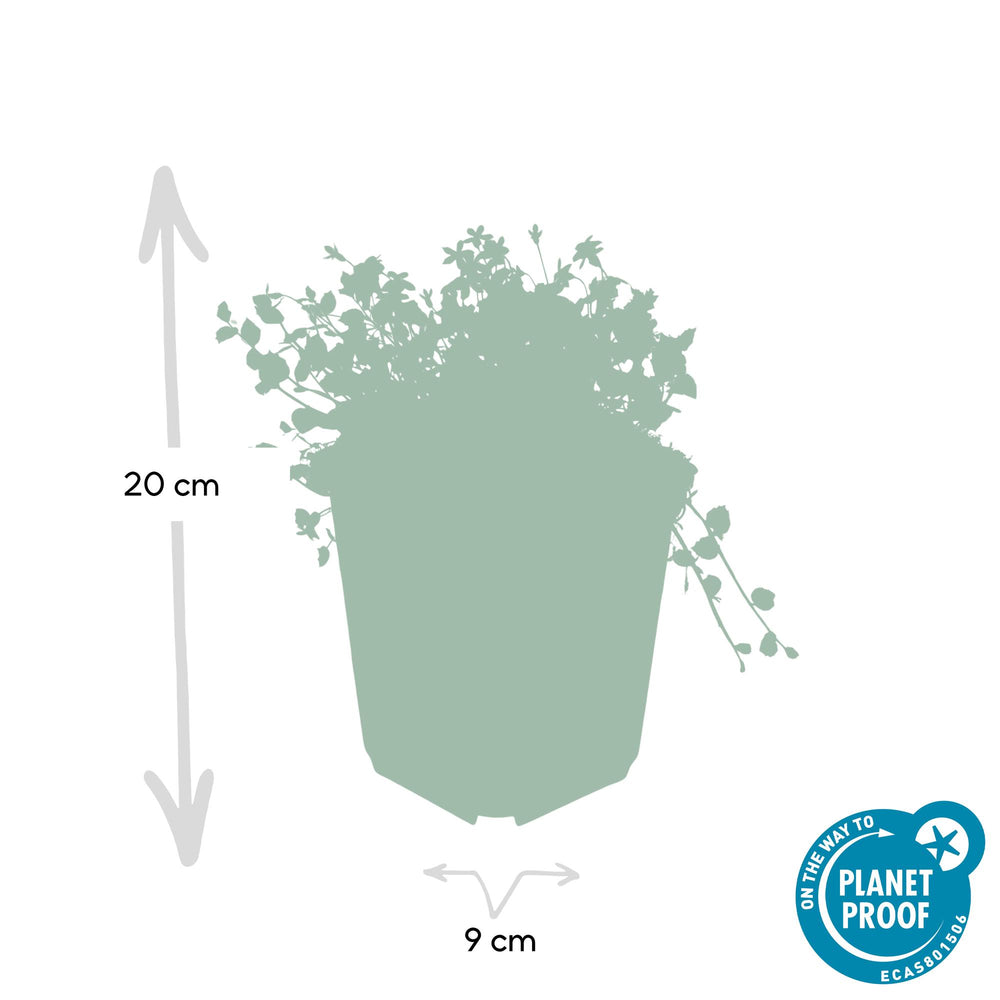
| Large packs (48 and 60 plants) | Plants in Ø9cm pots, 10 to 25 cm tall | A patch of a square metre or more |
Stock changes through the year; this page lists only the lines available now.
Where does blue star creeper grow best?
Blue star creeper grows best in moist, free-draining soil in sun to part shade. It does not like to dry out completely, so water through dry spells while it establishes. It suits the joints of paving, the edge of a border and small, lightly used lawn-substitute areas, similar to Irish moss and creeping thyme.
How do you plant and care for it?
Plant about 15 to 20 cm apart and water in well. It spreads by creeping stems and knits together within a season or two. In a hard winter it can die back in cold, exposed spots and re-grow in spring, so a sheltered position helps. Use our plant quantity calculator to work out numbers for a larger area.
Frequently asked questions
Is blue star creeper evergreen?
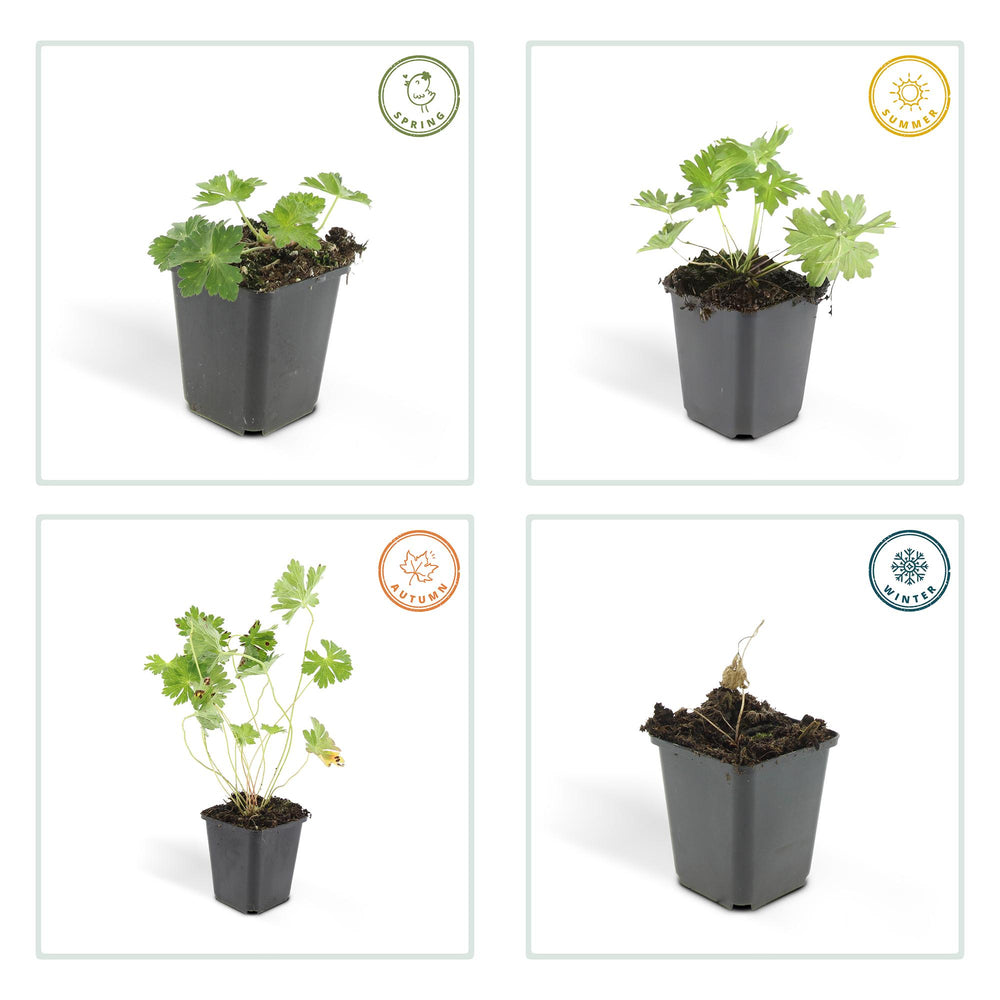
In mild conditions it keeps its leaves, but in a hard winter it can die back and shoot again in spring.
Can I walk on blue star creeper?
It tolerates light foot traffic, which is why it is used between stepping stones. It is not suited to heavy, regular use.
How far apart should I plant it?
About 15 to 20 cm apart; it spreads by creeping stems to fill the gaps.
More ground cover: ground cover plants, vinca, creeping thyme and bulk groundcover packs. To work out how many plants you need, use our plant quantity calculator.