




Calatheas, also called prayer plants, are houseplants grown for their patterned leaves, which fold upward at night and open again by day. The range includes Calathea makoyana (peacock plant), orbifolia, ornata and lancifolia. They like steady warmth and humidity, so they suit bathrooms and bright rooms away from direct sun. Free delivery to 25 EU countries, usually 5–8 working days.


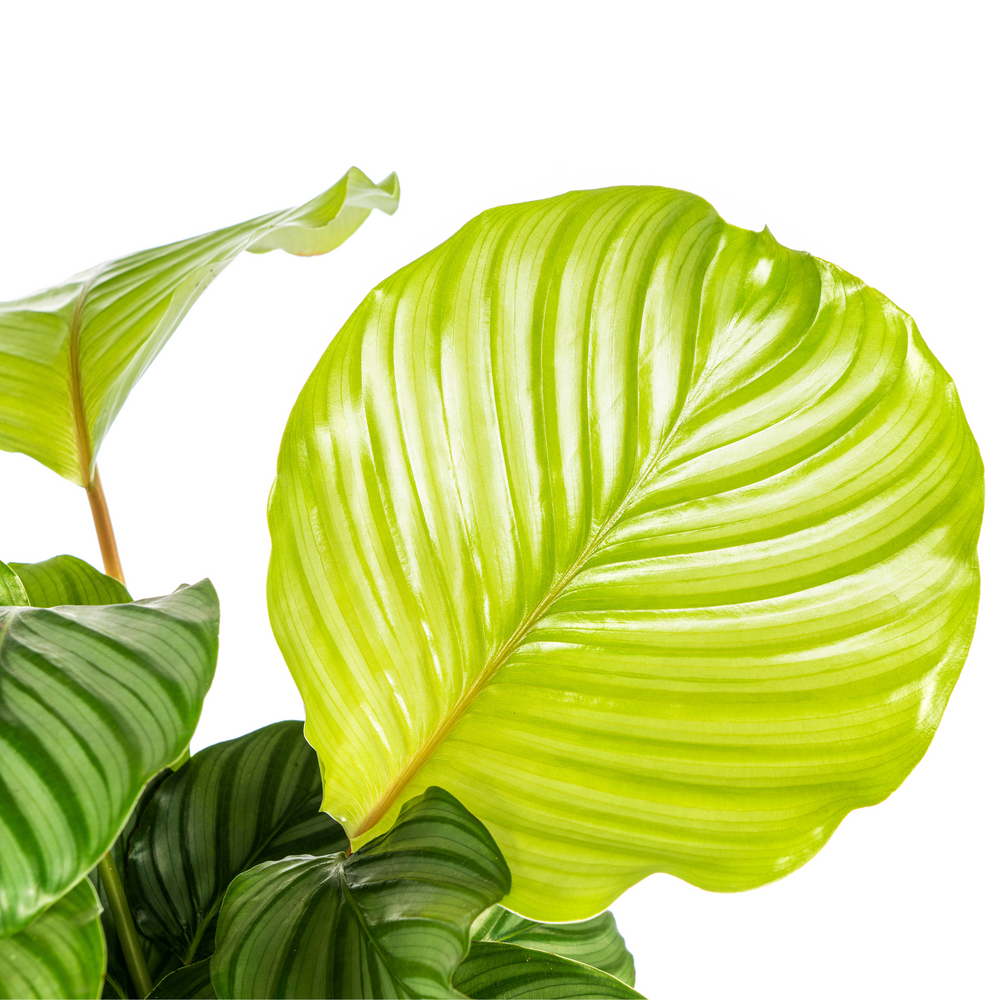
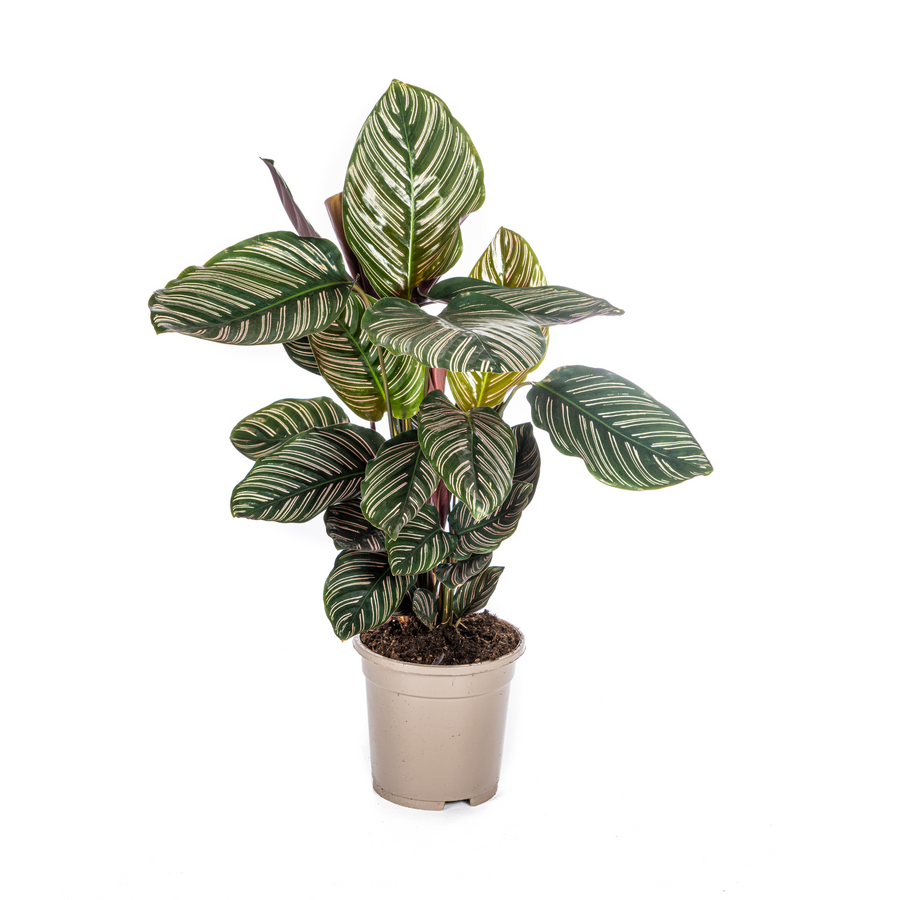
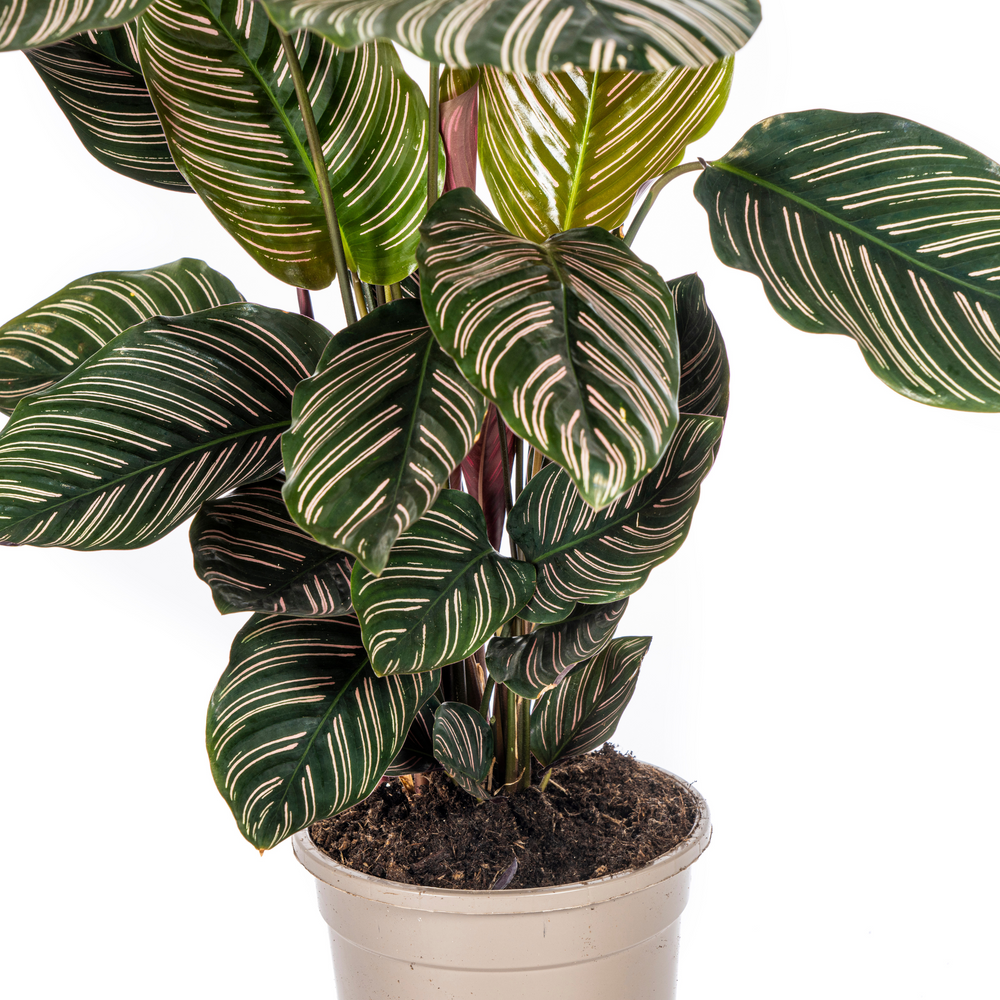
Which calathea should you choose?
| Plant | Look and size | Good for |
|---|---|---|
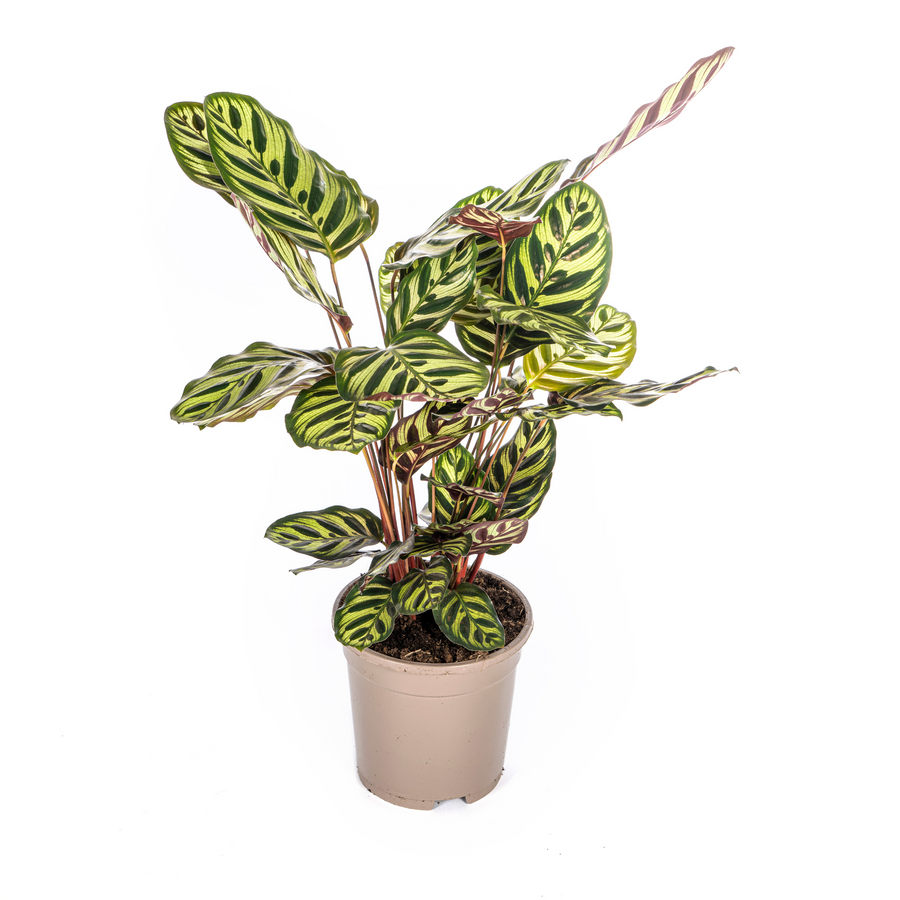
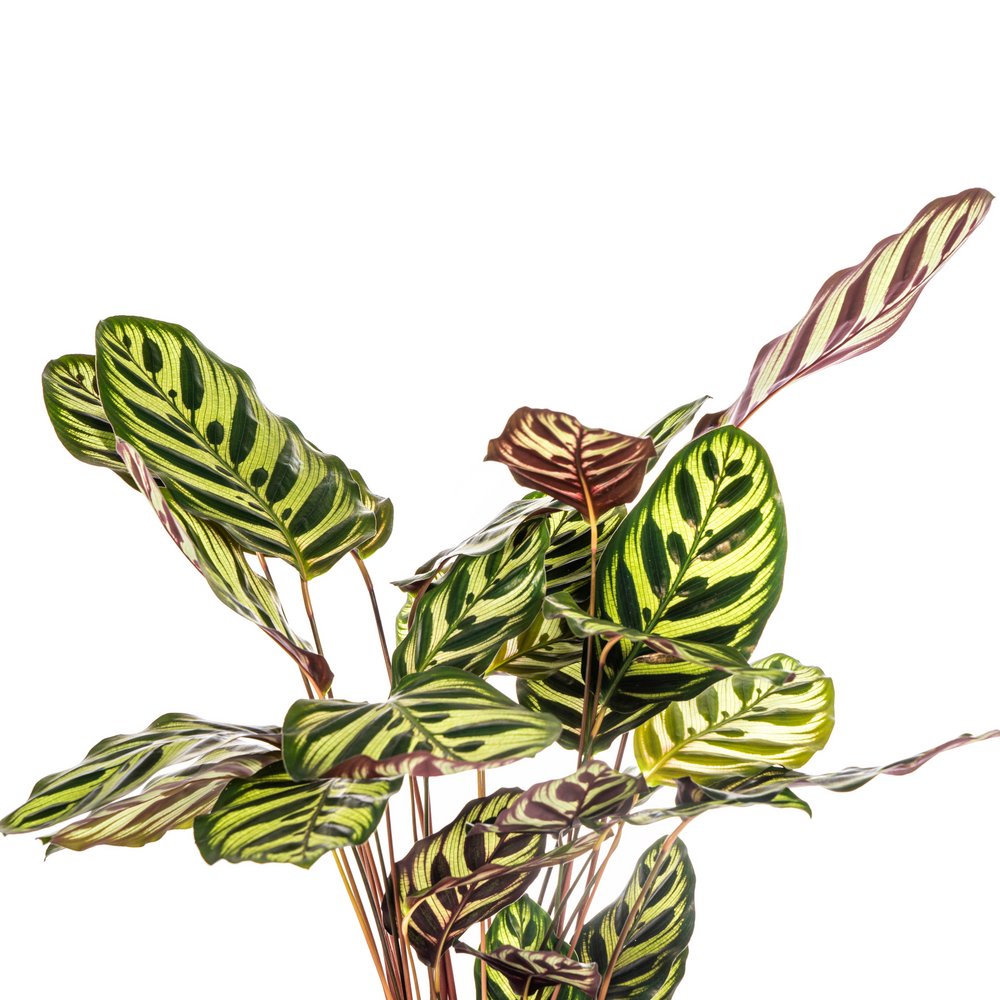
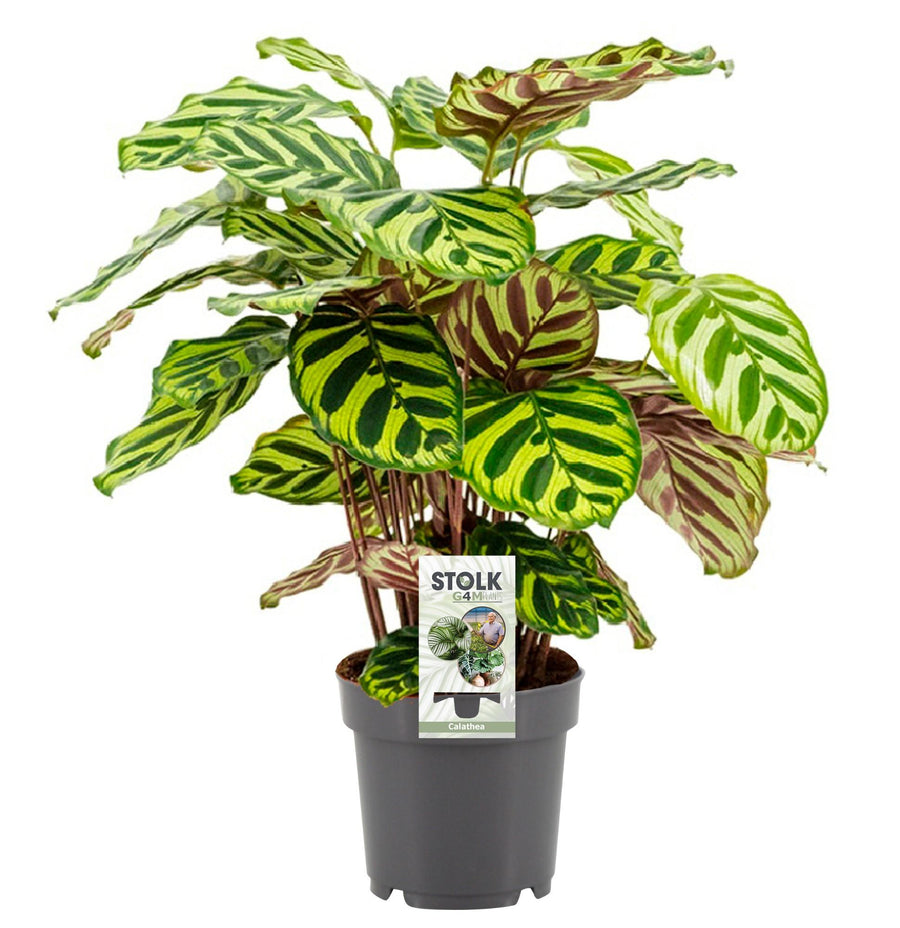
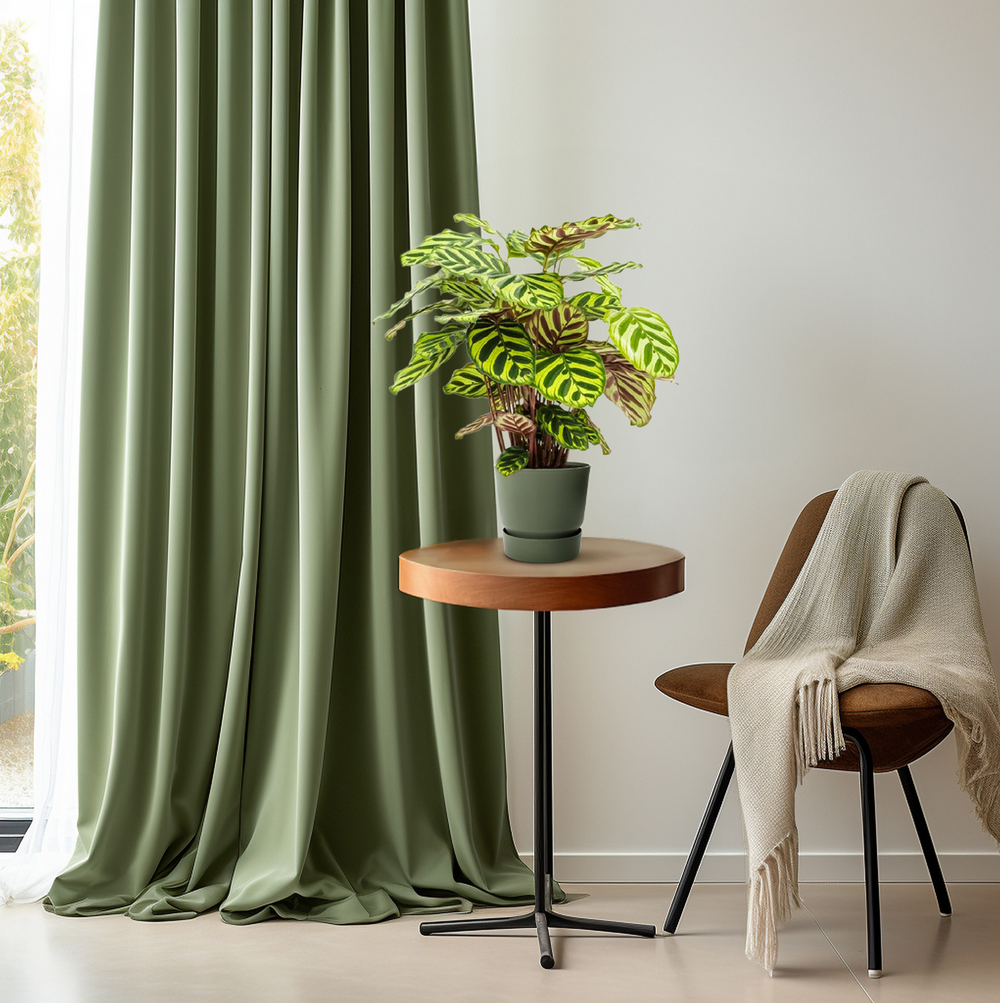
| Calathea makoyana (peacock plant) | Feather-like dark markings on pale green leaves, 40 to 80 cm | The classic; shelves and sideboards |
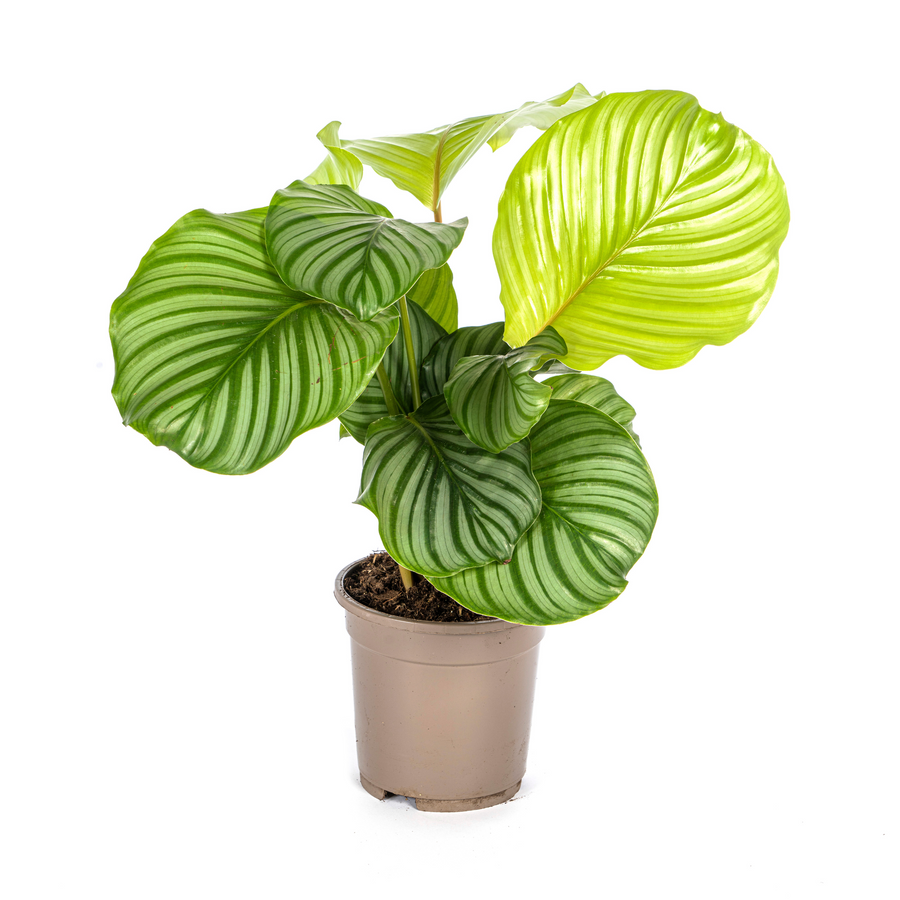
| Calathea orbifolia | Large round leaves with silver stripes, 40 to 90 cm | A broad-leaved centrepiece |
| Calathea ornata (Sanderiana) | Pink pinstripes on dark green, 60 to 80 cm | Colour on a bright windowsill |
| Calathea lancifolia (rattlesnake plant) | Long wavy leaves with dark blotches, 45 to 70 cm | The easiest of the group |
Stock changes through the year; this page lists only the lines available now.
Where do calatheas grow best?
Calatheas grow best in bright, indirect light with no direct sun, which scorches and fades the patterns. A bright bathroom or a spot a metre or two from a window works well. See our bathroom plants and best low-light plants.
How do you care for a calathea?
Keep the compost lightly moist but never soggy, and water when the top 2 cm feels dry. Calatheas dislike hard tap water: rainwater or filtered water avoids brown leaf tips. Keep them above about 15 °C, away from radiators and draughts, and mist or group them with other plants to raise humidity.
Calatheas are listed by the ASPCA as non-toxic to cats and dogs, so they are a popular choice for homes with pets. See our pet-safe plants guide.
Why are my calathea leaves curling or browning?
Curling leaves usually mean the plant is too dry or the air is too dry; brown crispy edges point to low humidity or tap water minerals. Water more evenly, move it away from heaters, and use softer water.
Frequently asked questions
Do calatheas need a lot of light?
They need bright indirect light. Too little light dulls the patterns; direct sun scorches the leaves.
Are calatheas hard to keep?
They are fussier than a snake plant: steady moisture, humidity and warmth matter. The rattlesnake plant (lancifolia) is the most forgiving.
Why does my calathea close its leaves at night?
This is normal. The leaves fold up in the evening and open again in the morning, which is why they are called prayer plants.
More houseplants: indoor plants, easy care plants, large indoor plants.