



Native Planting for Planning Conditions and Biodiversity Plans in Ireland
Got planning permission with a landscaping or biodiversity condition? This page explains what Irish councils usually ask for and which of our plants suit it. The short version: native species, planted in the first season, with a plan to replace any that fail.
Shop all Irish native plants →
Do you need a biodiversity gain plan?
Probably not as a separate document. Ireland has no national biodiversity net gain law; England requires a 10% gain, Ireland does not.
Instead, your county development plan and the conditions on your grant set the rules. Some councils ask larger sites to show a net gain: Sligo, for example, from 0.5 hectares. Read your grant conditions first, because they are your shopping list.
What councils usually ask for
| Requirement | What it means | Plants that fit |
|---|---|---|
| Native species | Irish native plants rather than ornamentals | Irish ivy, native ferns, great wood-rush, native bluebells |
| Hedgerow replacement | Replace hedge removed for an entrance or sightlines, in mixed native species | Hawthorn, blackthorn, hazel, holly, guelder rose (see below) |
| Pollinator planting | Flowers across the season for bees and other insects | Wild strawberry; lavender and echinacea in borders |
| A planting schedule | Species, sizes, quantities, locations and aftercare, often drawn up by a landscape architect | Our 6-, 24-, 48- and 60-plant packs make quantities easy to specify |
| Replacing failures | Plants that die are replaced in the next planting season, commonly for three or five years after completion | Order a spare pack, or reorder the same pack later |
Native plants we stock
Shade and woodland floor. Hart's-tongue fern, male fern, common polypody and great wood-rush. They cover bare ground under trees and along north-facing walls. Packs of 6 to 60. See also our ferns collection.
Walls, fences and banks. Irish ivy (Hedera hibernica). It flowers in autumn, when few plants feed insects, and its berries feed birds in winter. Packs of 6 to 60.
Meadow edges. Wild strawberry, an Irish native whose flowers attract bees and other pollinators.
More for shade. Sweet woodruff and bugle (Ajuga reptans) spread into a ground cover in shade and damp soil. Packs of 6 to 60.
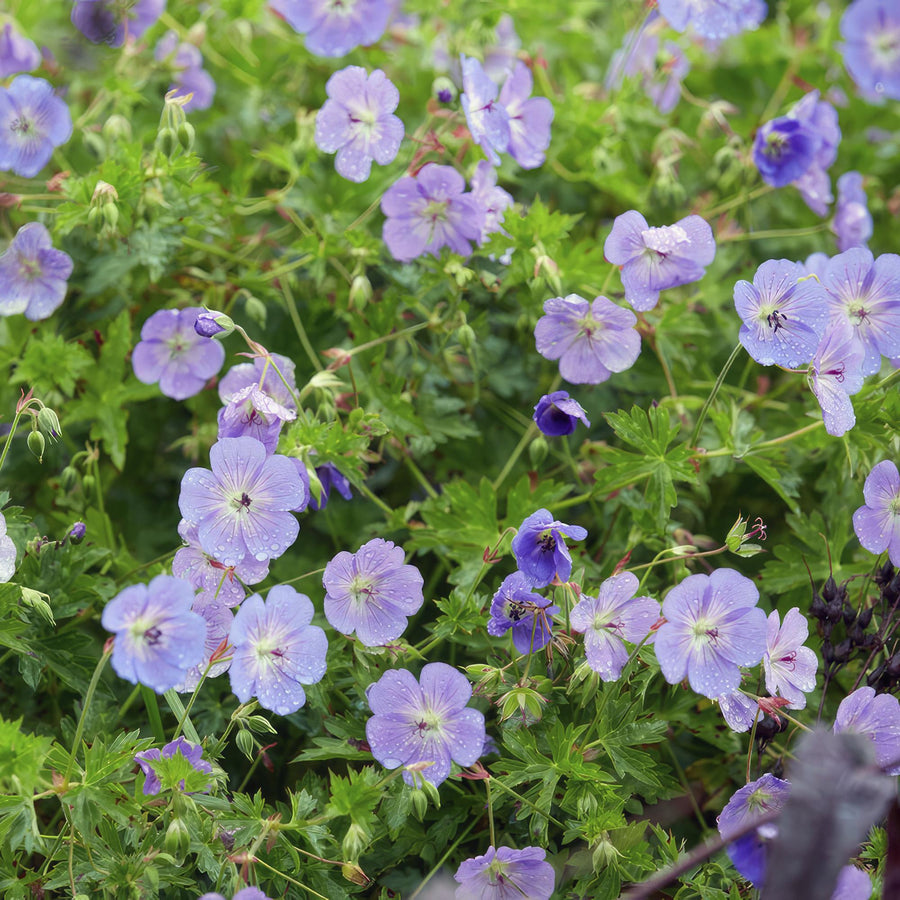
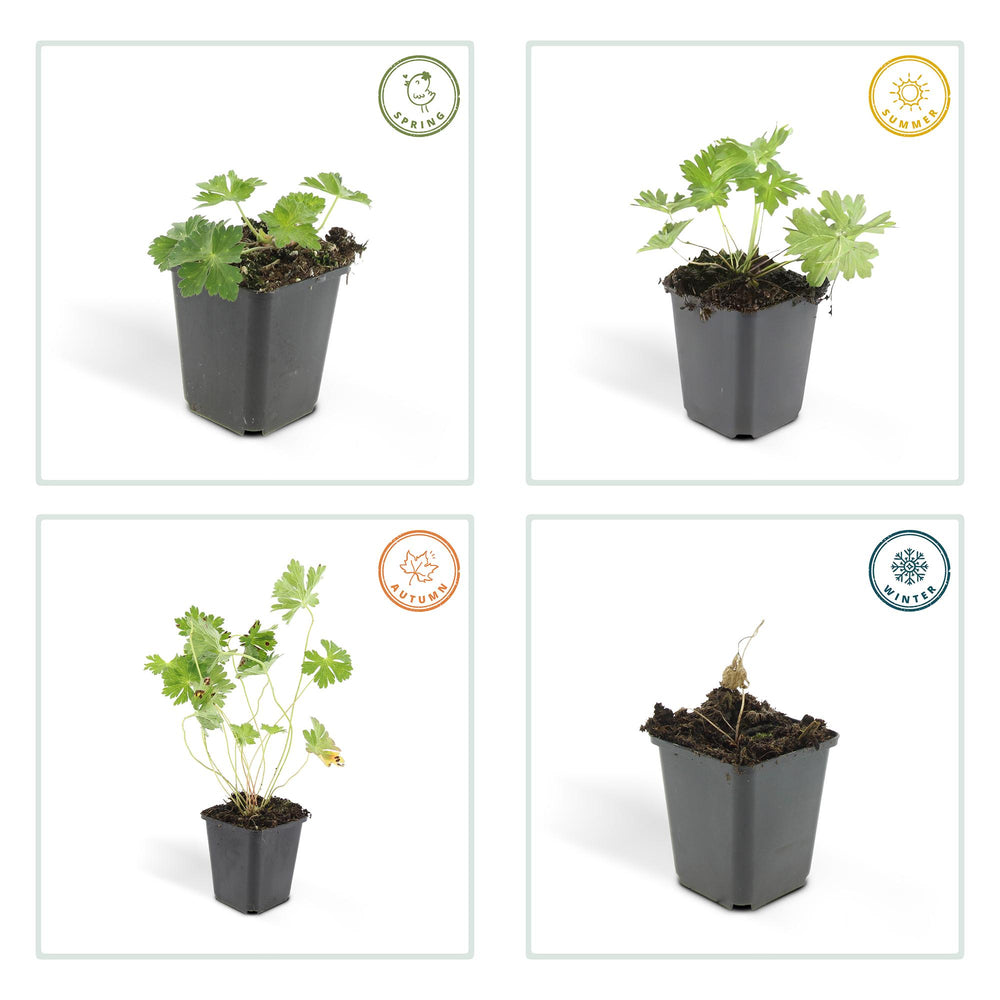
Limestone and rocky ground. Bloody crane's-bill (Geranium sanguineum) is native mainly in the Burren, and columbine (Aquilegia vulgaris) is a rare native of limestone ground. Packs of 6 to 60.
Hedging and structure. Yew (Taxus baccata), a native evergreen, in packs of 24 and 40.
Spring bulbs. Native bluebell (Hyacinthoides non-scripta), in packs of 160. This is the native species, not the Spanish bluebell or its hybrids, which conservation groups discourage.


Where our plants are grown
Our native plants are grown by partner growers in the EU. They are the right species for a "native species" condition. If your condition asks for Irish-provenance or locally sourced stock, check with your planning officer or ecologist before you order.
Native hedging
Native hedges are usually planted as bare-root whips while the plants are dormant. A typical mix uses hawthorn as the backbone, with blackthorn, hazel, holly and guelder rose. A double staggered row at roughly five to seven plants per metre is common.
Plants that won't meet a native condition
Laurel, bamboo, Euonymus and box-leaf honeysuckle make good garden hedges, but they are not native. Cherry laurel also spreads into woodland. If your condition says "native", choose from the lists above.
Aftercare
- Water through the first dry spell after planting.
- Mulch around new plants to hold moisture and suppress weeds.
- Guard hedging whips against rabbits.
- Replace any losses in the next planting season.
Frequently asked questions
Is biodiversity net gain mandatory in Ireland?
No. There is no national requirement. Some development plans promote it, and individual grants can carry biodiversity conditions.
Does my extension need a biodiversity plan?
Usually not. If none of your conditions mention landscaping or ecology, native planting is a bonus, not a requirement.
Who writes the planting schedule?
On larger schemes, a landscape architect or ecologist. We supply the plants to their schedule.
When can I plant?
Potted plants: any time the ground isn't frozen or waterlogged. Bare-root hedging whips are planted from November to March.
Do you deliver to building sites?
Yes, enter the site address at checkout. Delivery is free, usually within 5–8 working days.
Are your plants grown in Ireland?
No. They are grown by partner growers elsewhere in the EU. They are the right native species. If your condition requires Irish provenance, check with your planning officer or ecologist before you order.
Send us your schedule
Email your planting schedule or condition wording to info@plantgift.ie and we'll price it from our packs.
Related: Irish native plants · Ferns · Ground cover plants · Garden climbers · Landscaping plants
General guidance, not planning advice. Your grant conditions and your council decide what's required.